When I logged three months in Seoul in late 2008, it was in the form of a meditation regimen that wasn't quite finished at the conclusion of my stay. While meditation was valuable, I also found my travel and cultural experiences, throughout Seoul, the rest of South Korea, and into Hong Kong, to be just as valuable.
It looks like as my work slows down a bit, I will once again make Seoul my home for a bit, for a few months, to continue where I had left off. The goal will be to restore my health to the levels I had when I was wrapping up my initial stint, and to further bring up my energy-pooling abilities to a point where I can easily meditate even in an energy-vortex-devoid place like Southern California. (Only then will I be able to even consider spreading my good energy to others; right now, it's more like spreading negativity.)
Only preliminary details are being put down now, but I am in touch with my contacts in Seoul, and it looks like I will resume Seoul in 2-3 months. I was glad that a number of people found my tidbits from Seoul very valuable, and I am glad to continue on that path. I am also glad to know that supporters of South Korea's far-right government (including the vast majority of Korean-Americans) will once more find their blood pressure going up, as I dig up even more inconvenient truths; however, Chinese speakers will be a bit bummed, as I don't intend to go to a Chinese-speaking area this time - I expect to spend my off-time in Japan instead, which will be my first stint in Japan.
In addition to Japan (which will most likely take me to Tokyo, plus a more traditional part of Japan), I expect to do two trips within South Korea - one road trip to fill in the gaps from my initial 2008 one, and one quick flight to Jeju Island in the far south; both will also have an emphasis on South Korea's democratic struggle against domestic dictatorships, as places like Gwangju, Yeosu, and Jeju have been well-known for pro-democracy demonstrations, as well as the violent response from the right-wing dictators.
Assuming that the far-right government isn't out to ban me, I may even look at possible options for future work stints. I can run my US-based business by email and Internet just fine, my physical presence in the US will be necessary once a month at most. Of course, I will apply for proper work visa before I take up any employment. Proper work authorization will also mean that I can do economic activities (bank accounts, etc.) in South Korea and also enroll in its public health insurance plan, though it also means that I must cough up my alien registration number to the police state authorities to do my Internet activities. Will see what happens.
Showing posts with label Asia 2008. Show all posts
Showing posts with label Asia 2008. Show all posts
13 May 2010
13 January 2009
Gwaneum One: Winner!
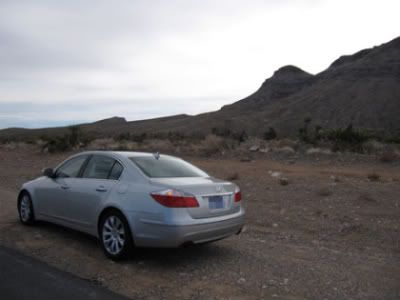
Several new developments are welcoming me and Gwaneum One.
First, the prestigious North American Car of the Year award, which is handed out every January, has gone to the Hyundai Genesis this year. This is a great award, as it is an independent award done and paid for by fifty jurors, all of whom are automotive experts but write for very different audiences, from performance freaks to consumer activists to everyone in between. I'm glad to know that Gwaneum One is a winner - and that she is every bit deserving of the win. Of course, this is the first time that a Korean car has ever won the award.
I'm starting to tap online resources as well, for parts, accessories, and enthusiast communities. I've found a number of sources for parts and accessories; some are Hyundai dealerships around the US which sell genuine US-spec parts and accessories at a discount, while a specialty shop, run by a Phoenix-based Hyundai and Kia dealership, can get me Korean-market accessories. If I ever decide that Gwaneum One ought to look like a Korean domestic market Genesis (complete with the wing logos and the BH380 trim badging), I can do that, though for a steep price (primarily due to the steering wheel logo having to be replaced, which also requires the airbag to be replaced). I'd rather have Gwaneum One carry the standard Hyundai logos as it does now. And there are enough owner communities out there, some generic Hyundai and some Genesis-specific, that I should be able to get information on improvements and problem fixes before most other people. It's kind of hard to find such communities with some cut-rate vehicles, mostly domestics. (And I can no longer stand the cockiness of BMW community groups - I'm glad that I'll never have to drive another BMW again.)
News feeds also tell me that Hyundai moved 6,167 Genesises across the US in 2008. Wikipedia calls this a "flop," but considering the price tag and the state of the economy, this is hardly a flop, though it's not exactly runaway success either. It bears remembering that US sales began only in very late June, and vehicles with navigation and/or V8 weren't really around until September anyway. Hyundai appears to be selling about 1,000 to 1,200 per month, which is a very respectable number for the price range, and similar to the numbers racked up by the likes of Lexus GS and Infiniti M. And there are no aggressive sales incentives either. The real goal here is not to move the most cars, but rather, to improve the perception of the Hyundai brand and get people to buy even the cheaper Hyundais with more confidence and joy. That's what the original Lexus LS400 did for Toyota and other Japanese brands, as well! I am starting to spot a Genesis every other day or so. If Hyundai needs to sell enough cars to justify the development costs, that can be very easily done in South Korea and China.
Last, but not the least, California DMV has processed Gwaneum One's registration much quicker than usual, and I've received the standard plates today. Of course, they won't last long, as I will swap them for the vanity plates when they are ready. But I'm glad that I no longer have to drive Gwaneum One with just a 90-day windshield temporary permit (which also happened to advertise my name and address to any passerby); now, I can drive anywhere in the US, and after a talk with my insurance agent, into Canada as well.

30 December 2008
Los Angeles: Korean Friendship Bell
This past Sunday, the last one of 2008, was spent again aboard Gwaneum One - in a very fitting way to end a very meaningful year. Here's my recap of the day.
 I brought Gwaneum One to my home church - Neighborhood Unitarian Universalist Church in Pasadena. This church has been one of Southern California's leading proponents of gay marriage, and I am glad to call it my spiritual home.
The Toyota Prius next to Gwaneum One bears many progressive-themed bumper stickers, and is quite typical of the cars that show up here. There is a good mix of all makes and models here; in the far right, another Hyundai (a black Santa Fe SUV) can be seen. I also counted three BMW 3-series sedans too on this day, which made me cringe, but it appears that most people are less in the know about BMW's evil deeds than I am, so I'll have to let it pass. I'll just make sure to spread the word on why I gave up a BMW to drive a Hyundai.
 After some shopping opportunities (which yielded nothing that I had wanted), I drove south to San Pedro, to visit Fort McArthur, now Angels Gate Park.
This park's claim to fame is the Friendship Bell, a gift of South Korea's military dictatorship to the United States for the Bicentennial. I came here for a photo op for Gwaneum One, but ended up getting far more than that.
 This dedication plaque, dated to July 4, 1976, is in English and Korean, and dedicates the bell to the American spirit and a long, prosperous alliance between the two nations.
Too bad, in the name of "preserving" that American spirit, South Korea's government and the Korean-Americans have been very hard at work destroying it instead!
 On January 28, 1981, President Chun Doo-hwan came here and planted this tree. He had seized power through a bloody military coup the previous year, and his US visit, within the first few days of the Reagan Presidency, was to ensure that Reagan would legitimize and back his rule.
Not all was bad under Chun, however. He had vowed to step down at the end of his 7-year term, though his ulterior motive was to install his military buddy Roh Tae-woo in an indirect election. The South Koreans were fed up with this move, however, and revolted, forcing Chun to accept direct elections. Roh did succeed Chun, but had to win the presidency the hard way - real votes in a fair direct election.
 Korean village guardians - Great General Under the Heavens, and Female General of the Underground. These are very familiar sights to me by now (in fact, a smaller pair even guards my bedroom), and I am glad to see them here again.
 The bell pavilion. A lovely sight!
 Detail of the pavilion sign and the color scheme. The colors need some restoration work, I must say; between the ocean breeze and the strong Southern California sunshine, Korean-style color decorations have a hard time keeping up.
 Here is the bell itself. It is a massive bell, modeled after the Emille Bell back in Gyeongju, which was part of my road trip last month. It really feels like by coming here, I extended my road trip by another month and 6,000 miles. The only change is that I showed up in Gwaneum One, instead of Gwaneum Zero.
The bell is actually the same size and design as the Emille Bell, making it one of the largest bells ever made. Yes, it does come with a special acoustic chamber that is unique to large Korean bells. And in a few nights, its sound will fill the skies of San Pedro, as 2009 is rung in.
The exterior features four pairs of figurine images: a Statue of Liberty, paired with a Korean counterpart.
 The ceiling colors are very vivid, as they had not been exposed as much to direct sunlight. I also get a good look at the acoustic chamber.
 Another look at the pavilion, with the Palos Verdes hills to the northwest.
This is a very clear, breezy hilltop, and an excellent place to put a bell pavilion. And this plot of land is surrounded by water on three sides - south, east, west - and that has parallels to the Korean peninsula, which itself faces water in the same three directions.
 A look east allows me to observe the busy harbor activities in San Pedro and Long Beach. In the distance are the hills of Orange County.
 Looking south, I can see the Santa Catalina Island. In all my years in Southern California, I never got to travel out there.
 There is even a small exhibit hall in this park, maintained jointly by South Korea's Cultural Service (under the auspices of the South Korean Consulate of Los Angeles) and the City of Los Angeles Parks Department. I am inside.
This is a map of Korea and vicinity, produced by South Korea's government mapping service. Korea is shown as a unified nation. The major islands of Japan and the northern populated areas of China (as far south as Shanghai) are also shown. Until a month ago, this map had pretty much described my extent of Asian travels; now, I've gone beyond this map, by visiting Hong Kong.
 There are some pieces of art here, including this golden Pensive Bodhisattva. I had seen so many of these during my three months in South Korea, and I am glad to see one right here in Los Angeles.
 More traditional Korean art. I can also take in modern Korean art, including the Mashimaro animated character and other pop art items.
There also are many tourist posters. They show lots of things, from Bongeunsa Temple next to Seoul's COEX Mall to Seokguram Grotto in Gyeongju. I had visited more or less all of them, and was glad to be reminded of my past three months.
I really feel that by coming here, I extended my South Korean sojourn.
 The exterior of the exhibit hall. The flags of the US and South Korea are hoisted outside, and the bell pavilion is in the distance.
 There is a sizable parking area here, almost full on this beautiful day. Many local residents like to hang out here for barbecues, for kite flying, for basketball, and for many other activities. A few Korean-Americans trickle in from all over Southern California as well.
Gwaneum One is in the center left, and today, it's the only Korean car in sight here - but a very appropriate one at that. In 1986, on the tenth anniversary of the bell, a visitor could've, for the first time, shown up in a South Korean automobile - the lowly Hyundai Excel. The visitor may have also brought a Samsung boombox or portable cassette player. In the late 1990s, a visitor could've shown up in a better car - probably a Hyundai Elantra - and his/her laptop would've boasted tons of LG semiconductors. And today, I brought Gwaneum One featuring an LG navigation system - though I don't have an LG cell phone on me (I love my iPhone too much). By contrast, back when the bell was first dedicated, the most advanced South Korean goods available in the US were primitive AM radios and black-and-white TV sets. At least they were more advanced than their predecessors - human hair wigs!
 A farewell shot of the bell pavilion, with the Catalina Island hills to the far right.
Looking forward to doing some more driving soon. I had missed this year's LA Auto Show due to my Asian trip, so I'll make up for it by driving down to San Diego for the auto show there. I'll stay far away from the BMW stand, but will definitely hang out at most other stands, just to see how most manufacturers' cars stack up against Gwaneum One. I'll certainly hang out for a while at the Hyundai stand, and talk to other visitors about how luxurious my Gwaneum One is! And of course there is that Las Vegas trip that I must also do. If I feel up to the task, I may even consider Palm Springs and/or Santa Barbara.
21 December 2008
I got it!
 For the past twelve hours, I've been the proud new owner of a silver Hyundai Genesis. In the above photo, I took delivery and have brought the car over to the dealership's parts department to pick up the official Hyundai iPod cable (unfortunately not free, but $30), after spending a few moments discussing my past Hyundai vehicles with the sales staff.
It was a miserable day, due to lingering jet lag and delays in paperwork for dumping my BMW. But I'm so fed up with the continuing reactionary politics in SoCal - including all the McCain-Palin and Yes on 8 bumper stickers still around me - that I just can't be seen in a BMW anymore. A Hyundai that carries the spirit of my past three months in Asia, complete with a Buddhist-themed vanity plate, is the best statement I can make on the crumbling Los Angeles freeways - to those cocky Hummer and BMW drivers.
Yes, the vanity plate is on order. The dealership has to order a normal plate for now, but I put in my separate order for a vanity plate. The vanity plate will be held at my designated DMV office, where I'll be able to turn in my normal plate for the swap.
Also, this is the first car that I am naming. Actually, my rental Sonata back in South Korea was the first car that I got to name. The rental Sonata was Gwaneum Zero, and this Genesis is Gwaneum One. Yes, I am naming my cars after my transgender matron saint.
Gwaneum One is NOT perfect. It's less tossable than the BMW 3-series (though it still handles very well - more like a Mercedes or a Lexus), and lacks the BMW's full tool kit. And the trunk, for that matter, has much of its interior unlined - I'd expect such cut-rate treatment in an Accent, not in this $40K luxury car. But it's a much bigger car with many more features, and still the best car I can buy at any price; the features of the top-end Technology Package, including the rear parking camera and the navigation system, work flawlessly. The nav uses Hyundai's DIS - Driver Information System - a knob that looks like the BMW iDrive, but works much better.
My wallet is $3oK lighter, but I am glad to have made the trade. I can't stand the BMW brand anymore, between its reactionary politics and its cut-rate customer service. When I gave up the 3-series, I saw it disappear into the CarMax service bay - and was relieved. I didn't miss it at all, and didn't even want to take a farewell photo.
Looking forward to years and years of wonderful journeys aboard Gwaneum One!
19 December 2008
De-briefing and more
Over a family dinner, I was debriefed as to what had happened during my absence:
The biggest statement I can make to the world, and most importantly to myself, over these developments, of course, is to proceed with my car swap. I made sure to clean out my BMW already; documents and other items that I must give up with my car are already loaded in it (except for spare parts, which will be taken care of today), while things I must transfer to my new Hyundai have already been taken out of the car. Today, I'll drive the BMW for the first time since my return; first, it'll allow me to assess its condition, and second, I'll get to drive it to a CarMax for a written appraisal. I'll continue to drive it through tomorrow, when I finally give it up and take delivery of the Hyundai.
I've still given no one any indication of my car swap. And that's the way I intend it. Nevertheless, I can no longer feel good/ethical about driving my BMW, and life is too short to be wasted in cars like that. The only reason I can even stand driving it from now on, is only because I am driving it to get rid of it.
And one more thing. I still can't believe that Hyundai now makes cars good enough to replace my BMW! I did discuss the Genesis with my coworkers and others - and all of them are telling me about how every review raves about the car. I guess it really is time to shut up, and start actually driving the thing. Sure, I was too young and too poor to drive the Lexus LS400 twenty years ago (and I still wouldn't, as I really hate Toyota), but I'm counting myself fortunate that I can afford the Genesis now, and make up for that. If my new Hyundai inspires someone else to buy his/her own, hopefully in place of a BMW, then I'll be happy.
- The wildfires had forced an evacuation of my place, and my BMW and other things had been moved for the duration.
- Los Angeles County, during the general election, voted for a 1% sales tax increase to fund transportation improvements. That makes my sales tax rate 9 1/4 %, and honestly, I don't think Southern California deserves any more of my money than what it already gets from me.
- Gay marriage is again banned, though by a very narrow margin. Duh.
The biggest statement I can make to the world, and most importantly to myself, over these developments, of course, is to proceed with my car swap. I made sure to clean out my BMW already; documents and other items that I must give up with my car are already loaded in it (except for spare parts, which will be taken care of today), while things I must transfer to my new Hyundai have already been taken out of the car. Today, I'll drive the BMW for the first time since my return; first, it'll allow me to assess its condition, and second, I'll get to drive it to a CarMax for a written appraisal. I'll continue to drive it through tomorrow, when I finally give it up and take delivery of the Hyundai.
I've still given no one any indication of my car swap. And that's the way I intend it. Nevertheless, I can no longer feel good/ethical about driving my BMW, and life is too short to be wasted in cars like that. The only reason I can even stand driving it from now on, is only because I am driving it to get rid of it.
And one more thing. I still can't believe that Hyundai now makes cars good enough to replace my BMW! I did discuss the Genesis with my coworkers and others - and all of them are telling me about how every review raves about the car. I guess it really is time to shut up, and start actually driving the thing. Sure, I was too young and too poor to drive the Lexus LS400 twenty years ago (and I still wouldn't, as I really hate Toyota), but I'm counting myself fortunate that I can afford the Genesis now, and make up for that. If my new Hyundai inspires someone else to buy his/her own, hopefully in place of a BMW, then I'll be happy.
18 December 2008
Korea Recap: Final Photos
Here are my final photos from Seoul, mostly from December 13th, except for the final one from December 14th.
 This announcement board adorns a subway station on Seoul Metro's Line 2 under Euljiro. It's quite interesting.
The bottom center asks South Koreans to save a billion liters of petroleum. This can be done by asking ten million petroleum users to conserve 100 liters (25 gallons) each. Relying more on mass transit, rather than driving, can easily save 100 liters of gasoline in under a month. Saving 100 liters of crude oil could be a bit more of a challenge, however, as one liter of crude yields several liters of gasoline.
The top left, from the National Human Rights Commission, says: "Differences can't be discriminated against." Various characters, from the homeless to a black rapper to a gay man to a transwoman, speak out about themselves, and why discrimination is foolish. My favorite character, however, is a cat, who says, tongue-in-cheek: "I think humans are pathetic too. Can I discriminate against you humans too?" Never mind that the commission's rulings are nonbinding, and that the 2MB government would rather not listen to them.
Further evidence of the 2MB policies are on the top right, a standard thought police poster again reminding me to turn in every leftist in sight for a 30 million won reward.
 Here is a map store. I can pick up road atlases, globes, and more. It's closed in this photo, but could be of interest to me on a future visit.
The store is run by Seongji, South Korea's leading map publisher. My road atlas for last month's road trip was published by this company too - and it was excellent! For now, I brought my atlas to the US, so that (1) it'll be a reminder of the road trip and (2) I can plot my next South Korean road trip, which may be as early as next spring.
The Republican city government is threatening this mall and all other subterranean malls too, by attempting to sell them to the highest corporate bidder who is certain to jack up rent and bring in only corporate shops. This store has a protest banner as well: "Choking the throats of mom-and-pop merchants. Grand Nationals, blow yourselves up."
 Here's another store, one that makes signs, often lit, all Christian. It's one of the few that doesn't feature a protest banner.
This is one of the signs made by the store, showing the Christian genealogy running from Adam to Jesus, as documented by the Bible.
 A tourist map of Jeju Island. I'll certainly fly over there the next time I am in South Korea. On top of all my statues from the past three months, I can definitely use a pair of harubangs.
 Jeju tourism promotion office, closed for renovation.
The message on either side of the door - ᄒᆞᆫ저옵서예 - means "welcome." It's in Jeju dialect, and the standard Korean equivalent would be 어서 오세요. Most mainland Koreans recognize that word from Jeju, plus harubang (grandfather), but that's about it.
I certainly look forward to being thrown off by the utterly strange dialect when I arrive in Jeju. I'll also love taking in the island's unique culture and sights while at it too.
 Now, I've arrived at Incheon Airport, cleared security and immigration, and picked up my Canon camera. Time to kill a few hours before my flight to Los Angeles boards. I took this photo, even though planespotting is technically illegal at Incheon, or any other South Korean airport that matter. (Many South Korean airports, including Busan Gimhae, are military airfields, so the no-photo rule would be strictly enforced at such places.)
The above is a Korean Air 747 with special arts promotion livery, complete with a Mona Lisa. That plane will fly to Sydney after sunset.
For that matter, Asiana also ran a flight to Sydney the same evening, though on a standard 777. Asiana does have a special livery 777 to commemorate the opening of its Paris route, and I saw it, but it was operating to Hanoi instead. My flight to Los Angeles, yet another 777, wore the old mocha gray paint job.
Asiana's passenger 747 fleet is down to five now, and I spotted three of them: HL7417 (combi) which had brought me back from Hong Kong, and now going to Singapore; HL7418 (pax) which flew me from LAX to Incheon twice, sitting overnight for a Beijing run the next morning; HL7428 (pax) which flew me from LAX to Incheon once, often flies the President, and was operating to New York, departing at the same time as my LAX flight. It was glad to see these travel companions again.
17 December 2008
Korea Recap: Downtown Incheon
Finally, I get to upload my final batches of South Korean photos. This is the first of two batches - covering my downtown Incheon tour of Friday, December 12th. As Incheon is a port city serving the Seoul area, and has enjoyed easy access to China and the rest of the world, my sightseeing reflected that.
My first destination for the day, however, was Sudoguksan Museum of Housing and Living. It's dedicated to life in a South Korean shantytown. Sudoguksan (Water Works Hill) became a shantytown when Japanese colonization, urbanization, and the Korean War forced many rural peasants to crowd Incheon for job opportunities. Today, the shantytown is a nice apartment complex, but a museum remains to carry on the memories into the future.
 Typical sight from a shantytown room. On the right is a boy's high school uniform from the 1960s, styled like the Japanese colonial era military uniforms. The schoolboy would've also had to shave his hair and wear a police-style cap. On the left, newsprints are being used as wallpapers; the newspaper is dated to 1969, and it looks like I can get a GoldStar black-and-white TV on a 7-month installment plan.
Living conditions at the shantytown typically consisted of a tiny shack, measuring about 120 square feet inside (the size of my dorm room in the college years), divided into two partitions, one each for a family, plus a shared kitchen for the two families. There was no running water, and electricity would've been a luxury - and illegally obtained by stealing power from utility lines.
 Some personal documents dating from the 1950s and the 1960s.
The right are a pair of coal cartridge coupons. Due to the oil crisis in the 1970s, many people stockpiled coal cartridges in a panic, and supplies ran low, requiring rationing coupons for purchase.
The middle are provincial identification cards, the primary means of South Korean identification until 1968. The bottom left is the Resident Registration Card, a national card replacing the provincial cards; it is issued to every adult with South Korean nationality and current residency, and designed to make it easier to identify North Korean infiltrators. National IDs were prompted by a 1968 incident where 31 armed North Korean commandos almost reached the Presidential Blue House in an assassination attempt; 30 of them were killed, and one recanted and became a South Korean, though not until a number of South Koreans and Americans were also killed in gunfights.
The upper left identifies the holder as a neighborhood captain. Every month on the 25th, the captain must hold a neighborhood meeting - a provision that continues today.
 As flash is prohibited, I had to take this photo in the dark.
The left asks residents to be vigilant. After all, North Korean infiltrators could be anywhere.
The middle promotes a healthy diet for a better body and a more prosperous future. Remember that well into the 1960s, starving due to the inability to afford food was quite common. Of course, now, South Koreans are overeating and getting overweight - though mercifully, they are still much healthier than Americans.
 A coal cartridge delivery man preparing his load. Due to the very steep alleys of the shantytown (most shantytowns were on hilltops), delivery was always difficult at best. With the freezing winter weather, slippery conditions could've made the delivery outright treacherous.
 Here's a neighborhood store featuring some snacks and toys.
At the end of this museum, I could find a gift shop that sold the exact replicas of toys that I could've found in 1960s South Korea, often at shantytown stores like this.
 Two signs of the times. The left is a stack of Arirang cigarettes, popular in the 1960s but no longer produced today.
The right is an ad for Chilsung Cola and Chilsung Cider. The Chilsung (Seven Stars) brand is used by the Lotte Group, which now manufactures Pepsi products for South Korea; Chilsung Cola no longer exists, replaced by Pepsi, but Chilsung Cider is still around as a sweeter alternative to Sprite and 7-Up. (A "cider" always refers to lemon lime soft drink in South Korea and in Japan.) In the 1960s, soft drinks always came in glass bottles; while the glass bottles are still around today (and served at restaurants and recycled after use), modern stores always now stock them in cans and plastic bottles.
 Another sign of the times. The northern Communists will never give up their desire to unify Korea by force, so vigilance is needed. This poster, dating back to the early to mid-1970s (as evidenced by the "Yushin" label, an early 1970s "restoration" by the military dictatorship for permanent rule), asks for the residents' help in identifying and capturing northern infiltrators.
Infiltrators and suspicious persons can always be reported to the nearest police station or military installation. If I am lucky enough to have a phone, I can also call 112 (police) or 113 (spy hotline). I may be rewarded up to 1 million won for turning in a spy, and up to 5 million won for turning in a spy in the act of entering South Korea; that's not much money today, but a fortune back then. (Modern reward amounts, by comparison, are 100 million and 150 million, respectively.)
If I am an infiltrator myself, or my immediate family member is, I am encouraged to surrender as well. The poster promises that I will escape punishment, and that I will be given assistance in adjusting to South Korean life.
 As the shantytowns had no running water, water had to be obtained at wells like this. With crummy water pumps of the day, hills traditionally lacked running water - no wonder shantytowns liked to be on hilltops.
A number of different materials were used for water containers. Sheet metal was the most expensive, and easy to dent, so special care was required in handling them.
 Typical communal outhouse. Again, there is no running water, so there is no flushing.
A typical scene would've involved long lines at outhouses every morning, and if one takes too much time inside, those in line would've complained mightily and loudly.
 The floor of a living/bedroom, with a cutaway view. The floor has heating ducts under the surface - "ondol" in Korean. It's been the traditional method of heating Korean homes. Burning coal produces very hot air that can be piped into the ducts. After years of use, however, deposits build up in the ducts and reduce effectiveness of the heating; there were specialists doing deposit removals, and they made a good living. Modern South Korean housing units continue to use similar heating systems, though they are more likely to send hot water, heated by an oil/gas boiler at a central plant (especially at apartment complexes), into the ducts.
 A shantytown kitchen, normally shared between two families. Sure, there was no water, but at least there was fire!
 Two social campaign posters, produced by an association of Seoul National University students dedicated to a "new, moral life."
The left one says: "As Japanese pop music fills the air, our national spirit is corrupted."
The right one says: "Six billion hwan disappear into the smoke of imported cigarettes." Imported cigarettes were illegal until the 1980s, and the hwan was a unit of currency that was phased out in 1962 due to rampant inflation.
 Lovely movie posters - more signs of the times. The middle one is Tarzan.
The right has two more slogans. The left: "Every household shall properly learn and realize proper moral etiquettes." The right: "Turn yourself in, claim freedom. Report spies, defend freedom."
Looks like just about any suspicious person should've been assumed to be a northern infiltrator. That's probably what the military dictatorship wanted anyway - to quell political opposition, keep the population in fear, and consolidate its grip on power.
 This household is actually well-off enough to have electricity - and television. There are also other nice furnishing around; some include a telephone, a vanity, and a late-model AM/FM radio.
The TV is showing a boxing match - a very popular form of entertainment back then. South Korea produced many excellent boxers - and one of them died after injuries sustained in a high-profile Las Vegas match in 1981 - but as South Korea has now become very affluent, few men want to be boxers today.
 On December 13th at 5PM, mousetraps will be set up in the neighborhood. Mice were a severe problem in South Korea at this time, as mice had plenty of places to breed in these primitive shacks. Of course, as the poison could harm children too, adults should take a clue and watch their children.
By now, I am using flash, even against regulations. Looks like the exhibits will not be damaged from light, and due to the dark shantytown alley recreations, I couldn't get adequate lighting otherwise. Nobody seemed to mind anyway.
 A special announcement from several government ministers dated to March 1971. The gist is as follows:
The northern Communists are still more eager than ever to reunify Korea under their rule by force. Moreover, the Soviets continue their Asian expansion, and the belligerent Chinese are developing their military, while the United States is withdrawing from South Vietnam and reducing its South Korean presence. In these uncertain times, your vigilance is needed more than ever. To that effect, we declare this month as a special period for turning in northern infiltrators. Again, if you turn in an infiltrator, you will be rewarded. If you are an infiltrator yourself, please turn yourself in; you will be given amnesty, and will be part of the free, democratic South Korean society.
Seriously, in 1971, North Korea had more economic power, due to it taking most of Korea's industrial base; South Korea was little more than the breadbasket. And for that matter, the entire Communist Bloc was still doing quite well. The fear of a northern takeover by force was very real. Things improved dramatically over the next two decades, however, as South Korea built its own industrial base and wealth, the Communist Bloc dissolved, and North Korea became isolated and impoverished.
Nevertheless, I will never forget the fact that the fears of this period drove South Korea to send the Moonies to the US and start messing with its own democratic institutions. I will never forgive.
 This poster details the ideology of the May 16, 1961 revolution, a military coup that ousted a democratic government and installed Park Chung-hee as the Supreme Commander of National Restoration. It's another sign of the times and certainly something of huge interest to me, as for better or for worse, Park played a decisive role in shaping South Korea for the next two decades.
The revolution, according to this poster, runs on six principles as follows:
I always tell people in South Korea, and in the US for that matter, that as impressive as Park's economics was, it will never be replicated by anyone again. During the Park era, the developed nations wanted to offer lots of aid and concessions to South Korea and build its economy, if only to keep South Korea firmly in the capitalist camp. But now that the Cold War is over, Third World economies are now seen only as sources of cheap labor to be exploited - and even South Korea itself sees its Asian neighbors that way. With less benevolence coming from the haves, the have-not nations are no longer able to develop South Korean-style.
 Two more slogans. I can never get enough of these - as I love getting cultural insights into a bygone Cold War era. This is the capitalist counterpart to a strictly controlled communist society. Priceless!
The left: "Rotten people hit the entertainment districts. Patriots hit the workplace." Connotation: shut up and work. Entertainment is evil. (Seriously, entertainers never got respect in traditional Korean society until modern times.)
The right: "Flawless anticommunism and vigilance leads to prosperity for our nation." Courtesy of the Korean Anticommunism Union.
 Here's a government public service announcement announcing a list of to-dos for the month, as follows:
 Yet two more slogans. The right one is the anti-foreign tobacco one that I had explained before.
The left one is interesting, however. "Destroy superstitions, let's achieve a scientific lifestyle. - Ministry of Health and Society" Superstitions would've included lots of indigenous beliefs, including shamanism and feng shui, which are today being revived as proud cultural heritage.
 The crowded living conditions at the shantytown residences meant that academics, including high school students preparing for college entrance exams, had to often go to a study room like this, in order to find a better environment to study. Such study rooms were run by volunteers, and are thought to have existed primarily in the 1960s and the 1970s, based on testimonies from the residents who were teens during that era and named study rooms by actual names.
I was invited to leave feedback for the museum. I wrote something along the likes of this:
I was born in the 1970s, and was relatively affluent due to my father's employment with the US military. I left for the US in the 1980s without ever visiting a shantytown.
The lives of the working poor, and their neighborly community spirit, in the 1960s and 1970s in South Korea leave me a strong impression. I currently live in a car-based affluent suburb of Los Angeles, where the people, coming from different races, cultures, and religions, live in a constant state of mistrust.
Equally impressive were all the posters from the Park military dictatorship, showing its dedication to hardline anticommunism and social conservatism.
Behind me, there was a television screen showing some episodes of Daldongne, a 1980 TV drama. The drama humanized the shantytown life stories, and made sure that the term "daldongne" itself (달동네, which translates into "moonlight neighborhood" referring to the hilltops' ample moonshine) would be popularly used to refer to shantytowns. It didn't last long, due to it being produced by Tongyang Broadcasting Corporation (TBC), which had to shut down in December 1980 due to another military dictatorship (Chun Doo-hwan) and its crackdown on mass media. TBC, which was Channel 7 in Seoul, became the second, entertainment-oriented channel for the government broadcaster KBS, which it remains to this day.
 Life in shantytowns involved lighting fire with matches. Needless to say, matches became a lifestyle and an art form. Incheon had major match manufacturers, as the first Korean town to be exposed to matches and their production. Today, matches are pretty much forgotten due to widespread use of cheap disposable lighters, but the museum had some special exhibits dedicated to matches, matchboxes, and their art, as seen above.
 A poor shantytown child probably couldn't afford real toys. Matches provide excellent play value as toys in themselves; with them, it's possible to solve some puzzles and develop brain power. The above are four puzzles that I can try - though I have no way of solving them. The four puzzles are as follows:
 I'm back outside. Another sign of the times: a 1964 movie poster. It's a very famous movie, "Red Muffler," shot in color and depicting life in South Korea's air force. It was directed by the renowned director Sang Okk Sheen, who was kidnapped by North Korea in 1978, escaped to the US in 1986, returned to South Korea in 1989, and passed away in 2006.
 Sudoguksan is now home to these modern government-built apartments, now ten years old. The shantytown residents had protested loudly over these apartments, as proper compensation for eviction had not been given.
For that matter, the apartment residents today are complaining themselves - over Incheon's plans to put an elevated highway nearby.
 A small section of the shantytown remains. But by shantytown standards, these homes are quite nice and big. Of course, there is no way I can bring a car and park here, but otherwise, it wouldn't be too bad to live here.
 Two traditional markets with different fates. The near market has been promoted to a tourist zone, and is congratulating. The far market, on the other side of the thoroughfare, has been condemned by the Republicans to make way for the plaza for Dongincheon subway station; the storeowners there are not getting proper compensation, and are protesting fiercely over the destruction of Incheon's oldest market.
 I am going through Dongincheon Station to look for a bus to Wolmido, to visit the emigration museum.
This poster informs me about participating in the Temple Stay program, run by the Jogye Order of Korean Buddhism. The program is primarily for foreigners, but this poster is intended for the locals. For about 100,000 won, I can take a bullet train to Jikjisa (a stop on my road trip last month), and eat, live, and meditate like a monk for a night. Not bad!
Incheon's user-unfriendly bus system meant that I had to take the subway one more stop to Incheon Station, then walk a long distance to find a marked bus stop for the No. 15 bus to the museum. Incheon doesn't offer free transfers between subway and buses, and I ended up wasting another 900 won base fare as a result.
The museum is free, but even then, it's kind of out of the way and not visited much.
 The museum is primarily intended to commemorate the 100th anniversary of the first Korean government sanctioned emigrants to a foreign land. Namely, they are the 102 people who left for Hawaii in 1903. Due to the Korean-American funding, most of this museum is about Korean-Americans.
Incheon at that time looked a lot like this. Wolmido, where I am, is the island on the lower left. Today, Wolmido is connected to the mainland and houses many ship docks.
 This announcement, in Korean and English, was put out by a group of American missionaries looking for migrants to Hawaii. Sugar cane plantations in Hawaii needed lots of labor. Initially, native Hawaiians were employed, but they were difficult to control. The Chinese came next, but were banned by the Chinese Exclusion Act of 1882. The Japanese followed, but they protested too much for the plantation owners' comfort. The Koreans ended up being the next choice.
In December 1902, the first party of 122 Koreans sailed from Incheon to Nagasaki, where the party was whittled down to 102 after a health check. The 102 then sailed on the USS Gaelic to Hawaii, arriving on January 13, 1903; of those, 16 had to return to Korea after failing the health checks, and only 86 settled in Hawaii.
Many of the migrants were recruited from Incheon area Protestant churches run by the missionaries. This gave the initial Korean-American community a strong Christian tint, and that continues into today.
 Here is a passport from the imperial government issued to a migrant.
Over 7,000 Koreans moved to Hawaii until 1905, when the flow was cut off due to Japan assuming Korea's foreign relations that year.
 A Korean man works the Hawaii sugar plantation. He would've been paid a monthly wage of $17. Women and children were paid 50 cents per day.
And a date chart to the left details the Korean-American milestones, running all the way up to January 13, 2006 as the Korean-American Day, the only such day in existence for an American immigrant demographic.
 When an entire Korean family settled in Hawaii, it would've been given a spartan housing unit similar to the one above. Single male laborers lived in dormitories.
So many Korean migrants to Hawaii were single men, that eventually, they took in Korean picture brides, who were an average of 15 years younger than the husbands. Marrying a local was not possible due to interracial marriages being taboo/banned in the US.
 The 1920 US Census counted a number of ethnic Koreans spread out over many states. The above map shows Korean population by state, with most of the population being in Hawaii and California.
After the Japanese annexation of Korea in 1910, returning to Korea became a non-option for many, and some Koreans moved to California in search of more opportunities. Sizable Korean communities popped up in San Francisco and San Joaquin Valley. Los Angeles wouldn't pick up until much later, but today, it's Los Angeles that has all the Koreans.
 Some documents belonging to early Korean-Americans. The left is a naturalization application, while the right shows a Social Security card.
 Due to excessive costs and travel time, returning to Korea, even for a visit, was unthinkable. The best many Korean-Americans could do was to buy Korean records (ads on the left) and play them on phonographs like the one on the right. The middle has some records, but they are mainstream American rather than Korean.
The Korean-Americans also organized through their churches and pro-independence organizations, and worked toward ending Japanese rule in Korea.
 A Korean-American classroom in Hawaii would've looked a lot like this. Textbooks are in Korean and English. This is where a young, second-generation or later Korean-American would've learned his/her ancestral culture and language.
 After World War II and the Korean War, the Korean-American community grew by leaps and bounds, thanks to the war brides and the war orphans. And in 1965, US immigration laws were rewritten to allow more non-Europeans to settle in the US. Many professional South Koreans moved to the US in droves, and pretty soon, Los Angeles had a sizable Koreatown.
The photo above, from 1982, shows the City of Los Angeles recognizing Koreatown as an official district, and putting up a sign on Olympic Boulevard to identify Koreatown. Caltrans also put up Koreatown signs on the Santa Monica Freeway (I-10) at the same time.
A brief history of Korean-Canadians also follows at a nearby exhibit. Very few Koreans went to Canada until the 1960s, and even then, they were more likely to be arriving after working in another foreign country (especially West Germany, home to many South Korean miners and nurses) rather than directly from Korea. Today, however, many affluent South Koreans move to Canada as a lifestyle choice, due to Canada's higher standards of living (even higher than the US) and excellent government services and infrastructure.
 There is also some discussion of the Korean community in Mexico. Here, a Korean laborer works a henequén plantation under the scorching Yucatan sun.
Only a single boatload of Koreans went to Mexico, in 1905, under a fradulent immigration scheme that turned out to be four years of slavery. The migrants sailed from Jemulpo (Incheon) and arrived in Merida. After four years of slavery at henequén plantations, the Koreans were free, but being impoverished, were unable to return home. The community scattered due to internal unrest within Mexico, and through intermarriage with locals and lack of contact with Japanese-occupied Korea, lost their Korean identities.
Today, a Calle Chemulpo (an alternative spelling of Jemulpo, and the one that Spanish speakers will properly pronounce) in Merida is the only link to the Korean community that had once existed there. However, starting in the 1960s, South Koreans and Korean-Americans started settling in Mexico, primarily in search of business opportunities. There is a small, sizable Korean population scattered around major Mexican cities today.
A few hundred Korean-Mexicans, unable to survive the Mexican society, moved to Cuba in the early 1920s. They, too, married the locals and disappeared, especially after the 1959 Fidel Castro revolution cut off all contacts to both South Korea and the Korean-Americans. The Korean-Cubans did make some history, however. Some supported the Castro revolution, and one became Castro's right-hand man, while others opposed it, fled to Florida, and became leaders of the Cuban exile community there.
 Other Latin American nations also saw significant Korean influx. Brazil and other South American nations were settled by South Koreans in the 1960s and later, lured by governments with plenty of land and resources but no population to develop them.
The above shows a South Korean passport and a land transfer document, from a Korean-Paraguayan. The land transfer document is interesting, as it is done in Spanish AND Korean.
 A very interesting 1944 relic. The US Postal Service, in the midst of World War II, issued special postage stamps commemorating the flags of thirteen nations that had been overrun by Germany and Japan. The original series consisted of twelve nations, all European, but popular request demanded that a thirteenth, Korea, be added as well, as the only non-European nation.
 I can wrap up my visit by finding out about Incheon-based Inha University. Inha stands for Incheon-Hawaii, and is a place for Korean-Americans to study their ancestral culture. I can also get brief profiles of nations with significant Korean populations, including China, Japan, Russia, Kazakhstan, Uzbekistan, and Germany; for nations outside the Americas, that's as good as it gets, unfortunately. South Korean governmental estimates for Korean populations in all other nations of the world can also be found; even the most remote African nations have a dozen or so Koreans each, there probably for community service or business.
And in the above, I can write messages to the Korean diaspora abroad, and deposit it into the mailbox to the left. The right shows a list of Korean community organizations around the world.
 I returned to Incheon Station. It's a sorry-looking building, honestly, as it's the end of a subway line rather than anything more major. It is set to be renovated into something much nicer over the next few years, however, as a number of other subway lines will terminate here by then. A monorail link to Wolmido and its emigration museum is also under construction.
Incheon Station sits across the street from the only real Chinatown in Korea. Also, this is the starting point for Incheon's bus tours. Three routes are offered: downtown, Incheon International Airport, and Ganghwa Island.
Incheon gained a Chinatown in the 1880s when trade with Manchu China opened, and it blossomed through the Japanese occupation. But the Cold War realities shut off Incheon's links to China, and the Park military government cracked down hard on the Chinese community. Most Chinese-Koreans have moved on to Taiwan or North America. Today's Chinatown is being revitalized as a tourist trap, partly to appeal to the Chinese who are now visiting Incheon again since 1992, when South Korea and Beijing established ties.
 Dragon staircase with red streetlights. If this doesn't say Chinatown, nothing does.
It's still Chinatown, however - not China. There is no mistaking that fact, as there are as many Korean signs as Chinese ones.
 One of three town gates adorning Incheon's Chinatown. Again, any respectable Chinatown must have a gate or two at least.
This is the only one that's presentable. A second one is undergoing renovations and is scaffolded, while a third one was torn down and won't be rebuilt until a Chinese city donates the new gate to Incheon.
Beyond this gate is Jayu (Freedom) Park, the first modern, Western-style urban park in Korea.
 Before going there, however, I am making sure to eat Chinese food. I'm keeping it cheap: all the dishes above are costing me only 10,000 won total, while ordering a small portion of sweet and sour pork would've cost at least 15,000, and well over 20,000 for a decent portion.
The foreground is a Chinese dish that was created in Incheon, and can only be found at Korean-style Chinese restaurants. Its name is chia chiang mein in Chinese, and jjajangmyeon (짜장면) in Korean. It uses black bean sauce. I made sure to load up on as much of this stuff as possible during my stay in South Korea, as despite being "Chinese," it's native to Korea, and can only be found in the US at various Koreatowns, which I do not look forward to visiting anytime soon.
Jjajangmyeon was created in the 1880s as an inexpensive dish that the Chinese coolies settling Incheon could affordably eat. Unfortunately, much of the real circumstances surrounding its creation are undocumented folklore that cannot be reliably verified. The reputed inventing restaurant for the dish doesn't even exist anymore.
I'm paying only 3,000 won for the noodle! The bean curd rice in the back adds another 7,000 won. Great value.
 Entering Freedom Park. In gratitude to the US for its Incheon Landing during the Korean War, the park gained its current name in the 1960s, and was developed as a monument to the American defense of South Korea.
The above monument dates to 1982, and commemorates the 100th anniversary of the 1882 document that established official diplomatic relationship between the United States and the Korean royal government. During the Cold War, South Korea developed the relationship into a strong military alliance, and South Korea has participated in many American wars, from Vietnam to Iraq. Unfortunately, the alliance between the two nations really serves the interests of the far right rather than the average people. I hope that the new Obama Presidency in the US will change that.
 General Douglas MacArthur is remembered here too. This statue was erected in 1956. MacArthur looks over the very harbor where he commanded a massive amphibious attack on September 15, 1950. Due to the severe tides around Incheon (the only larger tides in the world are found in Nova Scotia at Bay of Fundy), an amphibious attack here was a Hail Mary at best. But it was the only option, as South Korea was headed for a certain defeat otherwise. The attack succeeded, the Allies recaptured Seoul two weeks later, all North Korean supply lines into South Korea were cut, and South Korea was restored.
The Allied attacks continued, capturing most of North Korea as well, and the US was looking forward to a unified, capitalist Korea by Christmas 1950. But the Chinese spoiled everything, and the war ended in 1953 as a stalemate, with negligible border changes. Millions of Koreans and tens of thousands of Allied foreign troops had died in vain.
 Today, General MacArthur is overseeing some chess games, at least four by my count. All were played and kibitzed by elderly men.
Korean chess is always fun, even though serious strategy is usually played out through Go instead.
Another peculiarity in Korean chess... In Western chess, the king and queen are flanked by bishops, then by knights, then by rooks at the outermost position. In Korean chess, the elephant (the bishop) and the horse (the knight) may switch positions, so that the horse can be inside and the elephant outside. I am free to switch positions on just one horse-elephant pair, both pairs, or none at all. Once game starts, the switch can't happen, of course.
Another variation, according to Korean Wikipedia, also allows the wagon (the rook) to switch positions as well. But that rule is exclusively used in North Korea, and never seen in South Korea. And North Korean chess sets may also identify each piece in Korean rather than in Chinese, due to Chinese characters no longer being used in North Korea; South Korean sets are always in Chinese.
Last, but not the least, the Korean chess king is identified by a Chinese dynasty name. The green side, which is junior and moves first, is 楚 (Chou), an ancient kingdom that lost out to 漢 (Han), which is the red, senior side.
 Here is a newer US Navy memorial to General MacArthur, as well as those American sailors and marines who did the actual landing at Incheon. It flanks MacArthur himself, which was erected by grateful South Koreans.
 That's the harbor, now very hectic thanks to lots of fishing and cargo ships. Off of the left edge, passenger ferries also dock here, heading for South Korean islands as well as Chinese cities on the Yellow Sea coast.
In the distance is the Incheon Bridge, which will connect southern Incheon to the airport when it opens next year. It will augment the current Yeongjong Bridge, the only link from the airport to the rest of South Korea for now, and primarily serving Seoul-bound traffic.
It's also possible to spot some air traffic making the final approach into Incheon.
 Romance of Three Kingdoms is a well-read Chinese book among many Koreans, especially men. As the story is the most prominent common cultural link between Korea and China, Incheon's Chinatown makes sure to devote 150 meters of a somewhat steep alley to several dozen scenes from it.
In the above, the smaller left pictures show the Yellow Turban Bandits rising to throw China into chaos, in the late 180s. At the same time, the Ten Eunuchs serving the Han Court are murdered, and the Han Dynasty ends. The large picture to the right shows one warlord, the honorable Liu Bei, pledging to restore order and the dynasty; he is swearing brotherhood with Guan Yu and Zhang Fei.
 These scenes show the latter parts of the story. Guan Yu was captured by rival warlord Sun Quan, and was given the choice of serving Sun Quan or dying. Guan Yu chose death. His honor has now turned him into a deity in Chinese Taoism.
Neither Liu Bei nor Sun Quan won in the end. Their other rival, Cao Cao (therefore making up the "Three Kingdoms"), finally prevailed after almost a century, though by then, Cao Cao himself was long dead, and it was his relatives in the Sima family who were around to celebrate.
 A tiny Chinese garden. A rare opportunity to visit a Chinese garden in Korea.
 I'm leaving Chinatown and Incheon now. This building is the Korean-Chinese Cultural Center, which promotes Chinese culture in Incheon. Banners announce that there will soon be a contest measuring the Chinese proficiency of South Korean elementary and middle school students.
Visiting Incheon was a valuable opportunity to get in touch with South Korea under the Cold War industrialization, as well as my Chinese partial ancestry and my American present. I will remember for a long time.
My first destination for the day, however, was Sudoguksan Museum of Housing and Living. It's dedicated to life in a South Korean shantytown. Sudoguksan (Water Works Hill) became a shantytown when Japanese colonization, urbanization, and the Korean War forced many rural peasants to crowd Incheon for job opportunities. Today, the shantytown is a nice apartment complex, but a museum remains to carry on the memories into the future.
 Typical sight from a shantytown room. On the right is a boy's high school uniform from the 1960s, styled like the Japanese colonial era military uniforms. The schoolboy would've also had to shave his hair and wear a police-style cap. On the left, newsprints are being used as wallpapers; the newspaper is dated to 1969, and it looks like I can get a GoldStar black-and-white TV on a 7-month installment plan.
Living conditions at the shantytown typically consisted of a tiny shack, measuring about 120 square feet inside (the size of my dorm room in the college years), divided into two partitions, one each for a family, plus a shared kitchen for the two families. There was no running water, and electricity would've been a luxury - and illegally obtained by stealing power from utility lines.
 Some personal documents dating from the 1950s and the 1960s.
The right are a pair of coal cartridge coupons. Due to the oil crisis in the 1970s, many people stockpiled coal cartridges in a panic, and supplies ran low, requiring rationing coupons for purchase.
The middle are provincial identification cards, the primary means of South Korean identification until 1968. The bottom left is the Resident Registration Card, a national card replacing the provincial cards; it is issued to every adult with South Korean nationality and current residency, and designed to make it easier to identify North Korean infiltrators. National IDs were prompted by a 1968 incident where 31 armed North Korean commandos almost reached the Presidential Blue House in an assassination attempt; 30 of them were killed, and one recanted and became a South Korean, though not until a number of South Koreans and Americans were also killed in gunfights.
The upper left identifies the holder as a neighborhood captain. Every month on the 25th, the captain must hold a neighborhood meeting - a provision that continues today.
 As flash is prohibited, I had to take this photo in the dark.
The left asks residents to be vigilant. After all, North Korean infiltrators could be anywhere.
The middle promotes a healthy diet for a better body and a more prosperous future. Remember that well into the 1960s, starving due to the inability to afford food was quite common. Of course, now, South Koreans are overeating and getting overweight - though mercifully, they are still much healthier than Americans.
 A coal cartridge delivery man preparing his load. Due to the very steep alleys of the shantytown (most shantytowns were on hilltops), delivery was always difficult at best. With the freezing winter weather, slippery conditions could've made the delivery outright treacherous.
 Here's a neighborhood store featuring some snacks and toys.
At the end of this museum, I could find a gift shop that sold the exact replicas of toys that I could've found in 1960s South Korea, often at shantytown stores like this.
 Two signs of the times. The left is a stack of Arirang cigarettes, popular in the 1960s but no longer produced today.
The right is an ad for Chilsung Cola and Chilsung Cider. The Chilsung (Seven Stars) brand is used by the Lotte Group, which now manufactures Pepsi products for South Korea; Chilsung Cola no longer exists, replaced by Pepsi, but Chilsung Cider is still around as a sweeter alternative to Sprite and 7-Up. (A "cider" always refers to lemon lime soft drink in South Korea and in Japan.) In the 1960s, soft drinks always came in glass bottles; while the glass bottles are still around today (and served at restaurants and recycled after use), modern stores always now stock them in cans and plastic bottles.
 Another sign of the times. The northern Communists will never give up their desire to unify Korea by force, so vigilance is needed. This poster, dating back to the early to mid-1970s (as evidenced by the "Yushin" label, an early 1970s "restoration" by the military dictatorship for permanent rule), asks for the residents' help in identifying and capturing northern infiltrators.
Infiltrators and suspicious persons can always be reported to the nearest police station or military installation. If I am lucky enough to have a phone, I can also call 112 (police) or 113 (spy hotline). I may be rewarded up to 1 million won for turning in a spy, and up to 5 million won for turning in a spy in the act of entering South Korea; that's not much money today, but a fortune back then. (Modern reward amounts, by comparison, are 100 million and 150 million, respectively.)
If I am an infiltrator myself, or my immediate family member is, I am encouraged to surrender as well. The poster promises that I will escape punishment, and that I will be given assistance in adjusting to South Korean life.
 As the shantytowns had no running water, water had to be obtained at wells like this. With crummy water pumps of the day, hills traditionally lacked running water - no wonder shantytowns liked to be on hilltops.
A number of different materials were used for water containers. Sheet metal was the most expensive, and easy to dent, so special care was required in handling them.
 Typical communal outhouse. Again, there is no running water, so there is no flushing.
A typical scene would've involved long lines at outhouses every morning, and if one takes too much time inside, those in line would've complained mightily and loudly.
 The floor of a living/bedroom, with a cutaway view. The floor has heating ducts under the surface - "ondol" in Korean. It's been the traditional method of heating Korean homes. Burning coal produces very hot air that can be piped into the ducts. After years of use, however, deposits build up in the ducts and reduce effectiveness of the heating; there were specialists doing deposit removals, and they made a good living. Modern South Korean housing units continue to use similar heating systems, though they are more likely to send hot water, heated by an oil/gas boiler at a central plant (especially at apartment complexes), into the ducts.
 A shantytown kitchen, normally shared between two families. Sure, there was no water, but at least there was fire!
 Two social campaign posters, produced by an association of Seoul National University students dedicated to a "new, moral life."
The left one says: "As Japanese pop music fills the air, our national spirit is corrupted."
The right one says: "Six billion hwan disappear into the smoke of imported cigarettes." Imported cigarettes were illegal until the 1980s, and the hwan was a unit of currency that was phased out in 1962 due to rampant inflation.
 Lovely movie posters - more signs of the times. The middle one is Tarzan.
The right has two more slogans. The left: "Every household shall properly learn and realize proper moral etiquettes." The right: "Turn yourself in, claim freedom. Report spies, defend freedom."
Looks like just about any suspicious person should've been assumed to be a northern infiltrator. That's probably what the military dictatorship wanted anyway - to quell political opposition, keep the population in fear, and consolidate its grip on power.
 This household is actually well-off enough to have electricity - and television. There are also other nice furnishing around; some include a telephone, a vanity, and a late-model AM/FM radio.
The TV is showing a boxing match - a very popular form of entertainment back then. South Korea produced many excellent boxers - and one of them died after injuries sustained in a high-profile Las Vegas match in 1981 - but as South Korea has now become very affluent, few men want to be boxers today.
 On December 13th at 5PM, mousetraps will be set up in the neighborhood. Mice were a severe problem in South Korea at this time, as mice had plenty of places to breed in these primitive shacks. Of course, as the poison could harm children too, adults should take a clue and watch their children.
By now, I am using flash, even against regulations. Looks like the exhibits will not be damaged from light, and due to the dark shantytown alley recreations, I couldn't get adequate lighting otherwise. Nobody seemed to mind anyway.
 A special announcement from several government ministers dated to March 1971. The gist is as follows:
The northern Communists are still more eager than ever to reunify Korea under their rule by force. Moreover, the Soviets continue their Asian expansion, and the belligerent Chinese are developing their military, while the United States is withdrawing from South Vietnam and reducing its South Korean presence. In these uncertain times, your vigilance is needed more than ever. To that effect, we declare this month as a special period for turning in northern infiltrators. Again, if you turn in an infiltrator, you will be rewarded. If you are an infiltrator yourself, please turn yourself in; you will be given amnesty, and will be part of the free, democratic South Korean society.
Seriously, in 1971, North Korea had more economic power, due to it taking most of Korea's industrial base; South Korea was little more than the breadbasket. And for that matter, the entire Communist Bloc was still doing quite well. The fear of a northern takeover by force was very real. Things improved dramatically over the next two decades, however, as South Korea built its own industrial base and wealth, the Communist Bloc dissolved, and North Korea became isolated and impoverished.
Nevertheless, I will never forget the fact that the fears of this period drove South Korea to send the Moonies to the US and start messing with its own democratic institutions. I will never forgive.
 This poster details the ideology of the May 16, 1961 revolution, a military coup that ousted a democratic government and installed Park Chung-hee as the Supreme Commander of National Restoration. It's another sign of the times and certainly something of huge interest to me, as for better or for worse, Park played a decisive role in shaping South Korea for the next two decades.
The revolution, according to this poster, runs on six principles as follows:
- Anticommunism is the national ideology and policy. It had been little more than an empty slogan, but from now on, it will define everything.
- We will honor the UN Charter and international treaties, and will strengthen our ties to the United States-led alliance of free nations.
- We shall eradicate our society's old evils and corruption. To restore the national spirit, morality laws will be enforced.
- We shall do everything to bring hope to the people suffering from hunger and poverty. We will build a self-sufficient economy.
- To achieve the national wish, the unification of Korea, we shall do everything to develop the power and ability to keep up with the Communist forces.
- When our goals are accomplished, we shall cede power to honest, conscientious politicians, and return to our original duties.
I always tell people in South Korea, and in the US for that matter, that as impressive as Park's economics was, it will never be replicated by anyone again. During the Park era, the developed nations wanted to offer lots of aid and concessions to South Korea and build its economy, if only to keep South Korea firmly in the capitalist camp. But now that the Cold War is over, Third World economies are now seen only as sources of cheap labor to be exploited - and even South Korea itself sees its Asian neighbors that way. With less benevolence coming from the haves, the have-not nations are no longer able to develop South Korean-style.
 Two more slogans. I can never get enough of these - as I love getting cultural insights into a bygone Cold War era. This is the capitalist counterpart to a strictly controlled communist society. Priceless!
The left: "Rotten people hit the entertainment districts. Patriots hit the workplace." Connotation: shut up and work. Entertainment is evil. (Seriously, entertainers never got respect in traditional Korean society until modern times.)
The right: "Flawless anticommunism and vigilance leads to prosperity for our nation." Courtesy of the Korean Anticommunism Union.
 Here's a government public service announcement announcing a list of to-dos for the month, as follows:
- If your child is of elementary school age, please register and enroll. You do not need to produce official identity/vital records. (However, enrollees into secondary schools must.)
- Catch mice. Use mousetraps.
- Prevent traffic accidents. Ensure your children don't play in the path of vehicular traffic. (Very few South Koreans understood automobiles then, so accidents were extremely common.)
 Yet two more slogans. The right one is the anti-foreign tobacco one that I had explained before.
The left one is interesting, however. "Destroy superstitions, let's achieve a scientific lifestyle. - Ministry of Health and Society" Superstitions would've included lots of indigenous beliefs, including shamanism and feng shui, which are today being revived as proud cultural heritage.
 The crowded living conditions at the shantytown residences meant that academics, including high school students preparing for college entrance exams, had to often go to a study room like this, in order to find a better environment to study. Such study rooms were run by volunteers, and are thought to have existed primarily in the 1960s and the 1970s, based on testimonies from the residents who were teens during that era and named study rooms by actual names.
I was invited to leave feedback for the museum. I wrote something along the likes of this:
I was born in the 1970s, and was relatively affluent due to my father's employment with the US military. I left for the US in the 1980s without ever visiting a shantytown.
The lives of the working poor, and their neighborly community spirit, in the 1960s and 1970s in South Korea leave me a strong impression. I currently live in a car-based affluent suburb of Los Angeles, where the people, coming from different races, cultures, and religions, live in a constant state of mistrust.
Equally impressive were all the posters from the Park military dictatorship, showing its dedication to hardline anticommunism and social conservatism.
Behind me, there was a television screen showing some episodes of Daldongne, a 1980 TV drama. The drama humanized the shantytown life stories, and made sure that the term "daldongne" itself (달동네, which translates into "moonlight neighborhood" referring to the hilltops' ample moonshine) would be popularly used to refer to shantytowns. It didn't last long, due to it being produced by Tongyang Broadcasting Corporation (TBC), which had to shut down in December 1980 due to another military dictatorship (Chun Doo-hwan) and its crackdown on mass media. TBC, which was Channel 7 in Seoul, became the second, entertainment-oriented channel for the government broadcaster KBS, which it remains to this day.
 Life in shantytowns involved lighting fire with matches. Needless to say, matches became a lifestyle and an art form. Incheon had major match manufacturers, as the first Korean town to be exposed to matches and their production. Today, matches are pretty much forgotten due to widespread use of cheap disposable lighters, but the museum had some special exhibits dedicated to matches, matchboxes, and their art, as seen above.
 A poor shantytown child probably couldn't afford real toys. Matches provide excellent play value as toys in themselves; with them, it's possible to solve some puzzles and develop brain power. The above are four puzzles that I can try - though I have no way of solving them. The four puzzles are as follows:
- Turn these two equilateral triangles into eight equilateral triangles.
- There are four identically sized squares. Move three matches to turn them into three identically sized squares. Alternately, move four matches to make another set of three identically sized squares.
- This hexagon has six triangles inside. Move four matches to turn them into three triangles.
- Turn these four matches into nine. You may not break the matches.
 I'm back outside. Another sign of the times: a 1964 movie poster. It's a very famous movie, "Red Muffler," shot in color and depicting life in South Korea's air force. It was directed by the renowned director Sang Okk Sheen, who was kidnapped by North Korea in 1978, escaped to the US in 1986, returned to South Korea in 1989, and passed away in 2006.
 Sudoguksan is now home to these modern government-built apartments, now ten years old. The shantytown residents had protested loudly over these apartments, as proper compensation for eviction had not been given.
For that matter, the apartment residents today are complaining themselves - over Incheon's plans to put an elevated highway nearby.
 A small section of the shantytown remains. But by shantytown standards, these homes are quite nice and big. Of course, there is no way I can bring a car and park here, but otherwise, it wouldn't be too bad to live here.
 Two traditional markets with different fates. The near market has been promoted to a tourist zone, and is congratulating. The far market, on the other side of the thoroughfare, has been condemned by the Republicans to make way for the plaza for Dongincheon subway station; the storeowners there are not getting proper compensation, and are protesting fiercely over the destruction of Incheon's oldest market.
 I am going through Dongincheon Station to look for a bus to Wolmido, to visit the emigration museum.
This poster informs me about participating in the Temple Stay program, run by the Jogye Order of Korean Buddhism. The program is primarily for foreigners, but this poster is intended for the locals. For about 100,000 won, I can take a bullet train to Jikjisa (a stop on my road trip last month), and eat, live, and meditate like a monk for a night. Not bad!
Incheon's user-unfriendly bus system meant that I had to take the subway one more stop to Incheon Station, then walk a long distance to find a marked bus stop for the No. 15 bus to the museum. Incheon doesn't offer free transfers between subway and buses, and I ended up wasting another 900 won base fare as a result.
The museum is free, but even then, it's kind of out of the way and not visited much.
 The museum is primarily intended to commemorate the 100th anniversary of the first Korean government sanctioned emigrants to a foreign land. Namely, they are the 102 people who left for Hawaii in 1903. Due to the Korean-American funding, most of this museum is about Korean-Americans.
Incheon at that time looked a lot like this. Wolmido, where I am, is the island on the lower left. Today, Wolmido is connected to the mainland and houses many ship docks.
 This announcement, in Korean and English, was put out by a group of American missionaries looking for migrants to Hawaii. Sugar cane plantations in Hawaii needed lots of labor. Initially, native Hawaiians were employed, but they were difficult to control. The Chinese came next, but were banned by the Chinese Exclusion Act of 1882. The Japanese followed, but they protested too much for the plantation owners' comfort. The Koreans ended up being the next choice.
In December 1902, the first party of 122 Koreans sailed from Incheon to Nagasaki, where the party was whittled down to 102 after a health check. The 102 then sailed on the USS Gaelic to Hawaii, arriving on January 13, 1903; of those, 16 had to return to Korea after failing the health checks, and only 86 settled in Hawaii.
Many of the migrants were recruited from Incheon area Protestant churches run by the missionaries. This gave the initial Korean-American community a strong Christian tint, and that continues into today.
 Here is a passport from the imperial government issued to a migrant.
Over 7,000 Koreans moved to Hawaii until 1905, when the flow was cut off due to Japan assuming Korea's foreign relations that year.
 A Korean man works the Hawaii sugar plantation. He would've been paid a monthly wage of $17. Women and children were paid 50 cents per day.
And a date chart to the left details the Korean-American milestones, running all the way up to January 13, 2006 as the Korean-American Day, the only such day in existence for an American immigrant demographic.
 When an entire Korean family settled in Hawaii, it would've been given a spartan housing unit similar to the one above. Single male laborers lived in dormitories.
So many Korean migrants to Hawaii were single men, that eventually, they took in Korean picture brides, who were an average of 15 years younger than the husbands. Marrying a local was not possible due to interracial marriages being taboo/banned in the US.
 The 1920 US Census counted a number of ethnic Koreans spread out over many states. The above map shows Korean population by state, with most of the population being in Hawaii and California.
After the Japanese annexation of Korea in 1910, returning to Korea became a non-option for many, and some Koreans moved to California in search of more opportunities. Sizable Korean communities popped up in San Francisco and San Joaquin Valley. Los Angeles wouldn't pick up until much later, but today, it's Los Angeles that has all the Koreans.
 Some documents belonging to early Korean-Americans. The left is a naturalization application, while the right shows a Social Security card.
 Due to excessive costs and travel time, returning to Korea, even for a visit, was unthinkable. The best many Korean-Americans could do was to buy Korean records (ads on the left) and play them on phonographs like the one on the right. The middle has some records, but they are mainstream American rather than Korean.
The Korean-Americans also organized through their churches and pro-independence organizations, and worked toward ending Japanese rule in Korea.
 A Korean-American classroom in Hawaii would've looked a lot like this. Textbooks are in Korean and English. This is where a young, second-generation or later Korean-American would've learned his/her ancestral culture and language.
 After World War II and the Korean War, the Korean-American community grew by leaps and bounds, thanks to the war brides and the war orphans. And in 1965, US immigration laws were rewritten to allow more non-Europeans to settle in the US. Many professional South Koreans moved to the US in droves, and pretty soon, Los Angeles had a sizable Koreatown.
The photo above, from 1982, shows the City of Los Angeles recognizing Koreatown as an official district, and putting up a sign on Olympic Boulevard to identify Koreatown. Caltrans also put up Koreatown signs on the Santa Monica Freeway (I-10) at the same time.
A brief history of Korean-Canadians also follows at a nearby exhibit. Very few Koreans went to Canada until the 1960s, and even then, they were more likely to be arriving after working in another foreign country (especially West Germany, home to many South Korean miners and nurses) rather than directly from Korea. Today, however, many affluent South Koreans move to Canada as a lifestyle choice, due to Canada's higher standards of living (even higher than the US) and excellent government services and infrastructure.
 There is also some discussion of the Korean community in Mexico. Here, a Korean laborer works a henequén plantation under the scorching Yucatan sun.
Only a single boatload of Koreans went to Mexico, in 1905, under a fradulent immigration scheme that turned out to be four years of slavery. The migrants sailed from Jemulpo (Incheon) and arrived in Merida. After four years of slavery at henequén plantations, the Koreans were free, but being impoverished, were unable to return home. The community scattered due to internal unrest within Mexico, and through intermarriage with locals and lack of contact with Japanese-occupied Korea, lost their Korean identities.
Today, a Calle Chemulpo (an alternative spelling of Jemulpo, and the one that Spanish speakers will properly pronounce) in Merida is the only link to the Korean community that had once existed there. However, starting in the 1960s, South Koreans and Korean-Americans started settling in Mexico, primarily in search of business opportunities. There is a small, sizable Korean population scattered around major Mexican cities today.
A few hundred Korean-Mexicans, unable to survive the Mexican society, moved to Cuba in the early 1920s. They, too, married the locals and disappeared, especially after the 1959 Fidel Castro revolution cut off all contacts to both South Korea and the Korean-Americans. The Korean-Cubans did make some history, however. Some supported the Castro revolution, and one became Castro's right-hand man, while others opposed it, fled to Florida, and became leaders of the Cuban exile community there.
 Other Latin American nations also saw significant Korean influx. Brazil and other South American nations were settled by South Koreans in the 1960s and later, lured by governments with plenty of land and resources but no population to develop them.
The above shows a South Korean passport and a land transfer document, from a Korean-Paraguayan. The land transfer document is interesting, as it is done in Spanish AND Korean.
 A very interesting 1944 relic. The US Postal Service, in the midst of World War II, issued special postage stamps commemorating the flags of thirteen nations that had been overrun by Germany and Japan. The original series consisted of twelve nations, all European, but popular request demanded that a thirteenth, Korea, be added as well, as the only non-European nation.
 I can wrap up my visit by finding out about Incheon-based Inha University. Inha stands for Incheon-Hawaii, and is a place for Korean-Americans to study their ancestral culture. I can also get brief profiles of nations with significant Korean populations, including China, Japan, Russia, Kazakhstan, Uzbekistan, and Germany; for nations outside the Americas, that's as good as it gets, unfortunately. South Korean governmental estimates for Korean populations in all other nations of the world can also be found; even the most remote African nations have a dozen or so Koreans each, there probably for community service or business.
And in the above, I can write messages to the Korean diaspora abroad, and deposit it into the mailbox to the left. The right shows a list of Korean community organizations around the world.
 I returned to Incheon Station. It's a sorry-looking building, honestly, as it's the end of a subway line rather than anything more major. It is set to be renovated into something much nicer over the next few years, however, as a number of other subway lines will terminate here by then. A monorail link to Wolmido and its emigration museum is also under construction.
Incheon Station sits across the street from the only real Chinatown in Korea. Also, this is the starting point for Incheon's bus tours. Three routes are offered: downtown, Incheon International Airport, and Ganghwa Island.
Incheon gained a Chinatown in the 1880s when trade with Manchu China opened, and it blossomed through the Japanese occupation. But the Cold War realities shut off Incheon's links to China, and the Park military government cracked down hard on the Chinese community. Most Chinese-Koreans have moved on to Taiwan or North America. Today's Chinatown is being revitalized as a tourist trap, partly to appeal to the Chinese who are now visiting Incheon again since 1992, when South Korea and Beijing established ties.
 Dragon staircase with red streetlights. If this doesn't say Chinatown, nothing does.
It's still Chinatown, however - not China. There is no mistaking that fact, as there are as many Korean signs as Chinese ones.
 One of three town gates adorning Incheon's Chinatown. Again, any respectable Chinatown must have a gate or two at least.
This is the only one that's presentable. A second one is undergoing renovations and is scaffolded, while a third one was torn down and won't be rebuilt until a Chinese city donates the new gate to Incheon.
Beyond this gate is Jayu (Freedom) Park, the first modern, Western-style urban park in Korea.
 Before going there, however, I am making sure to eat Chinese food. I'm keeping it cheap: all the dishes above are costing me only 10,000 won total, while ordering a small portion of sweet and sour pork would've cost at least 15,000, and well over 20,000 for a decent portion.
The foreground is a Chinese dish that was created in Incheon, and can only be found at Korean-style Chinese restaurants. Its name is chia chiang mein in Chinese, and jjajangmyeon (짜장면) in Korean. It uses black bean sauce. I made sure to load up on as much of this stuff as possible during my stay in South Korea, as despite being "Chinese," it's native to Korea, and can only be found in the US at various Koreatowns, which I do not look forward to visiting anytime soon.
Jjajangmyeon was created in the 1880s as an inexpensive dish that the Chinese coolies settling Incheon could affordably eat. Unfortunately, much of the real circumstances surrounding its creation are undocumented folklore that cannot be reliably verified. The reputed inventing restaurant for the dish doesn't even exist anymore.
I'm paying only 3,000 won for the noodle! The bean curd rice in the back adds another 7,000 won. Great value.
 Entering Freedom Park. In gratitude to the US for its Incheon Landing during the Korean War, the park gained its current name in the 1960s, and was developed as a monument to the American defense of South Korea.
The above monument dates to 1982, and commemorates the 100th anniversary of the 1882 document that established official diplomatic relationship between the United States and the Korean royal government. During the Cold War, South Korea developed the relationship into a strong military alliance, and South Korea has participated in many American wars, from Vietnam to Iraq. Unfortunately, the alliance between the two nations really serves the interests of the far right rather than the average people. I hope that the new Obama Presidency in the US will change that.
 General Douglas MacArthur is remembered here too. This statue was erected in 1956. MacArthur looks over the very harbor where he commanded a massive amphibious attack on September 15, 1950. Due to the severe tides around Incheon (the only larger tides in the world are found in Nova Scotia at Bay of Fundy), an amphibious attack here was a Hail Mary at best. But it was the only option, as South Korea was headed for a certain defeat otherwise. The attack succeeded, the Allies recaptured Seoul two weeks later, all North Korean supply lines into South Korea were cut, and South Korea was restored.
The Allied attacks continued, capturing most of North Korea as well, and the US was looking forward to a unified, capitalist Korea by Christmas 1950. But the Chinese spoiled everything, and the war ended in 1953 as a stalemate, with negligible border changes. Millions of Koreans and tens of thousands of Allied foreign troops had died in vain.
 Today, General MacArthur is overseeing some chess games, at least four by my count. All were played and kibitzed by elderly men.
Korean chess is always fun, even though serious strategy is usually played out through Go instead.
Another peculiarity in Korean chess... In Western chess, the king and queen are flanked by bishops, then by knights, then by rooks at the outermost position. In Korean chess, the elephant (the bishop) and the horse (the knight) may switch positions, so that the horse can be inside and the elephant outside. I am free to switch positions on just one horse-elephant pair, both pairs, or none at all. Once game starts, the switch can't happen, of course.
Another variation, according to Korean Wikipedia, also allows the wagon (the rook) to switch positions as well. But that rule is exclusively used in North Korea, and never seen in South Korea. And North Korean chess sets may also identify each piece in Korean rather than in Chinese, due to Chinese characters no longer being used in North Korea; South Korean sets are always in Chinese.
Last, but not the least, the Korean chess king is identified by a Chinese dynasty name. The green side, which is junior and moves first, is 楚 (Chou), an ancient kingdom that lost out to 漢 (Han), which is the red, senior side.
 Here is a newer US Navy memorial to General MacArthur, as well as those American sailors and marines who did the actual landing at Incheon. It flanks MacArthur himself, which was erected by grateful South Koreans.
 That's the harbor, now very hectic thanks to lots of fishing and cargo ships. Off of the left edge, passenger ferries also dock here, heading for South Korean islands as well as Chinese cities on the Yellow Sea coast.
In the distance is the Incheon Bridge, which will connect southern Incheon to the airport when it opens next year. It will augment the current Yeongjong Bridge, the only link from the airport to the rest of South Korea for now, and primarily serving Seoul-bound traffic.
It's also possible to spot some air traffic making the final approach into Incheon.
 Romance of Three Kingdoms is a well-read Chinese book among many Koreans, especially men. As the story is the most prominent common cultural link between Korea and China, Incheon's Chinatown makes sure to devote 150 meters of a somewhat steep alley to several dozen scenes from it.
In the above, the smaller left pictures show the Yellow Turban Bandits rising to throw China into chaos, in the late 180s. At the same time, the Ten Eunuchs serving the Han Court are murdered, and the Han Dynasty ends. The large picture to the right shows one warlord, the honorable Liu Bei, pledging to restore order and the dynasty; he is swearing brotherhood with Guan Yu and Zhang Fei.
 These scenes show the latter parts of the story. Guan Yu was captured by rival warlord Sun Quan, and was given the choice of serving Sun Quan or dying. Guan Yu chose death. His honor has now turned him into a deity in Chinese Taoism.
Neither Liu Bei nor Sun Quan won in the end. Their other rival, Cao Cao (therefore making up the "Three Kingdoms"), finally prevailed after almost a century, though by then, Cao Cao himself was long dead, and it was his relatives in the Sima family who were around to celebrate.
 A tiny Chinese garden. A rare opportunity to visit a Chinese garden in Korea.
 I'm leaving Chinatown and Incheon now. This building is the Korean-Chinese Cultural Center, which promotes Chinese culture in Incheon. Banners announce that there will soon be a contest measuring the Chinese proficiency of South Korean elementary and middle school students.
Visiting Incheon was a valuable opportunity to get in touch with South Korea under the Cold War industrialization, as well as my Chinese partial ancestry and my American present. I will remember for a long time.
Subscribe to:
Posts (Atom)