Showing posts with label religion. Show all posts

14 April 2010

Europe recap, Day 10: Jungfrau

Tuesday, November 3, 2009. No driving involved this day, as all my day was spent hiking up in the Alps. As Rick Steves likes to say, any day in Switzerland that is not spent hiking in the Alps is outright criminal.

The day started with the first Jungfraubahn train leaving Interlaken Ost Station at 6:35. I was glad to see that at every row on the train, I could see the map of the area, showing major points of interest (transfer points, villages, etc.) and their altitude in meters. I was starting at Interlaken, which was at under 600 meters altitude (around 1,800 feet), and ending up two hours later at Jungfraujoch, at 3,500 meters altitude (close to 12,000 feet!). A fairly conventional train took me as far as Lauterbrunnen, from where I had to transfer to a narrow-gauge cogwheel train, full of aged Alpine flair, for the second leg up to Kleine Scheidegg.
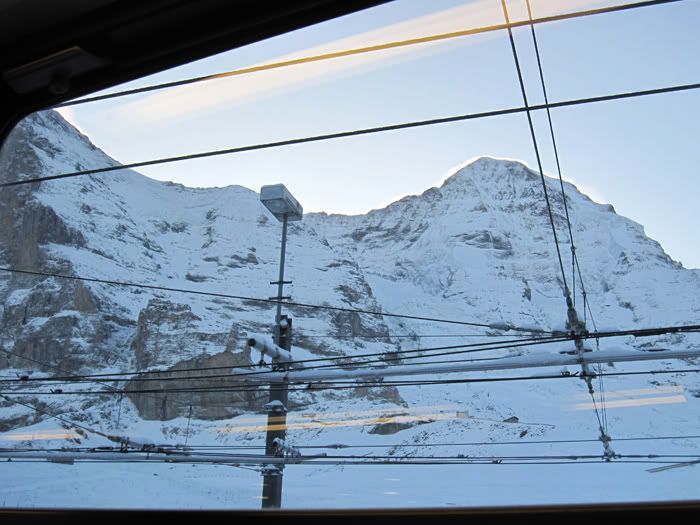

Now, I am on another cogwheel train, having just pulled out of snow-covered Kleine Scheidegg Station, for the final push up to Jungfrau. It's quite chilly outside already, and altitude at this point is already over 2,000 meters.

The train, intended for tourist use, is quite posh, and the cabin has video screens playing introductory video to the region and the railway. Narrations are in eight languages: German, English, French, Italian, Spanish, Japanese, Mandarin Chinese, then Korean. The crowd this day was very Asian indeed.

The wall on the left is part of Eiger (Ogre), while the peak on the right is Mönch (Monk). In the legends, Mönch protects Jungfrau (Maiden), further to the right, from Eiger.


Another look at Eiger, and its infamous North Face, before entering the tunnel portion.

The tunnel starts at Eiger's anus (ewww!) and works up his intestines, before transferring to Mönch and going under his robe, to finish at Jungfraujoch, the mountain pass between Mönch and Jungfrau.
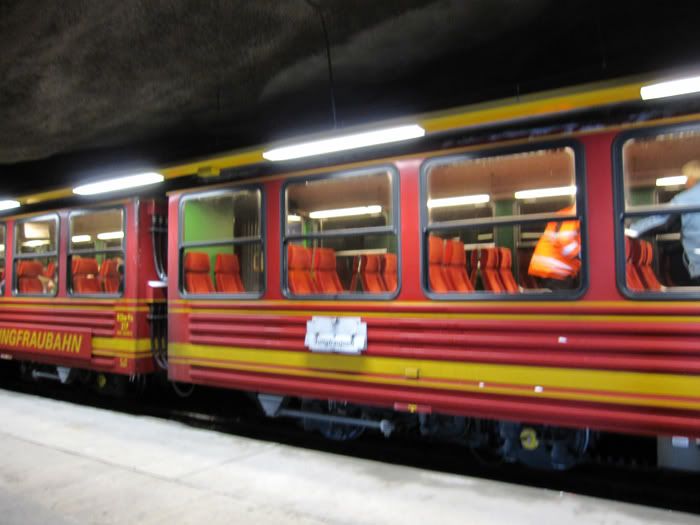


Inside the tunnel, the train makes a couple of intermediate stops, to allow passengers to disembark and take a look outside.

The outside views are okay, but not spectacular, as the Plexiglass windows are all fogged up. It's quite chilly in the tunnel, but still balmy (at least above freezing) compared to the harsh conditions outside.

The first stop, well inside Eiger's guts, is already at 2,700 meters above sea level. From this point on, hypoxia becomes a real issue; staying fully alert becomes a bit of a challenge, and nausea is common for weaker travelers.
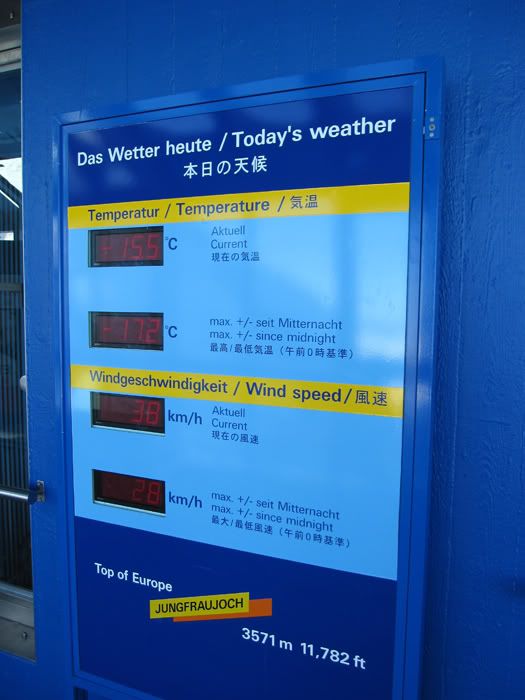

I am now at the Sphinx, the observatory located on top of Jungfraujoch. It is a lengthy elevator ride (about 100 meters up) from Jungfraujoch's train station.

My elevation is now at 3,571 meters, or 11,782 feet, above sea level; Jungfraujoch is, indeed, called the "Top of Europe," and its railway station is the highest in Europe. And those temperature readings (barely above zero, if converted to Fahrenheit) and wind gusts are certainly NOT conducive for a hike outside. Between the hypoxia, the cold, and the wind chills, I'd pass out within minutes and freeze to death, if I ever dared to go all the way to Jungfrau's summit.

At least I am able to move about. My mother is completely clobbered, and she is forced to lie down on a bench near the train platforms and rest.


I am looking north in the direction of Interlaken, which would be hidden in the east-west valley in the distance. Gotta love these glacier-carved mountain cliffs and valleys, something I don't see on a daily basis.
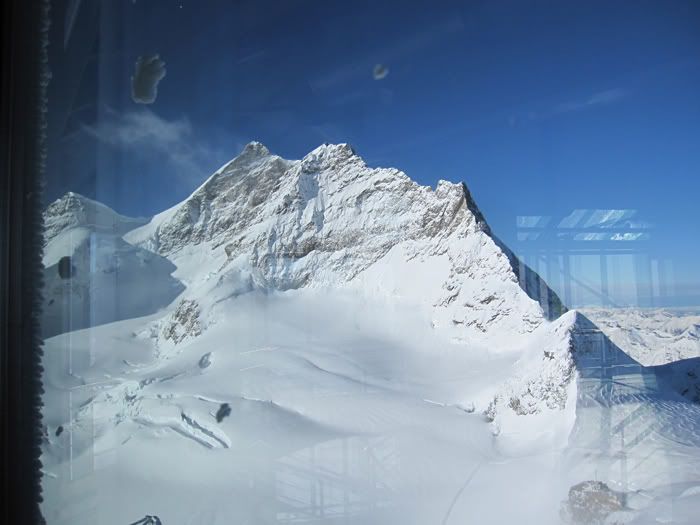

Looking west at Jungfrau herself.

Before I came on this trip, I was having some mountain-related discussions with two Facebook friends - Morwen Madrigal of New Orleans, who used to work for the US Geological Survey back in the day and brags about "having licked all the Grand Tetons," and Angela LaChic of Calgary, who loves to climb the Canadian Rockies close to her home. As all three of us are lesbians, we joked about selectively climbing, and licking, the summits of mountains with female names, and of course, I had to mention my planned visit to Jungfrau.

Unfortunately, again, due to the bitter conditions outside, this is as close as I'll ever get to licking the summit of that maiden, clad in a beautiful white dress.
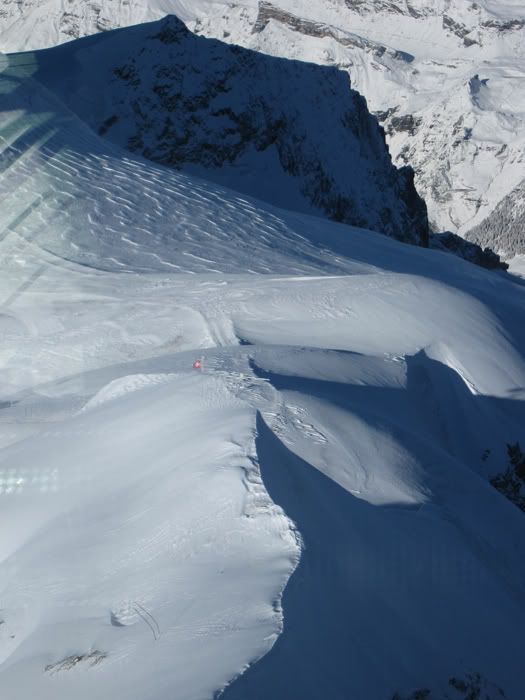


That Swiss flag marks an observation point, and the start of the trail to the Jungfrau summit. But then, again, due to the brisk conditions, it'll be a challenge for me to get even that far, and walk on the glacier, much less attempt the summit of Jungfrau, which is at 4,100 meters above sea level, and will definitely clobber me.

Granted, I've been at high altitudes like this before - just four months prior, I had been at Rocky Mountain National Park, where I actually drove to 12,000 feet in a car - but it is harder now, due to a much faster ascent this time. At Rocky Mountain, I had spent the previous day or two at altitudes around 5,000 feet and a bit higher, so I had some chance to get used to the thinner air, but I don't have that benefit here at Jungfraujoch.
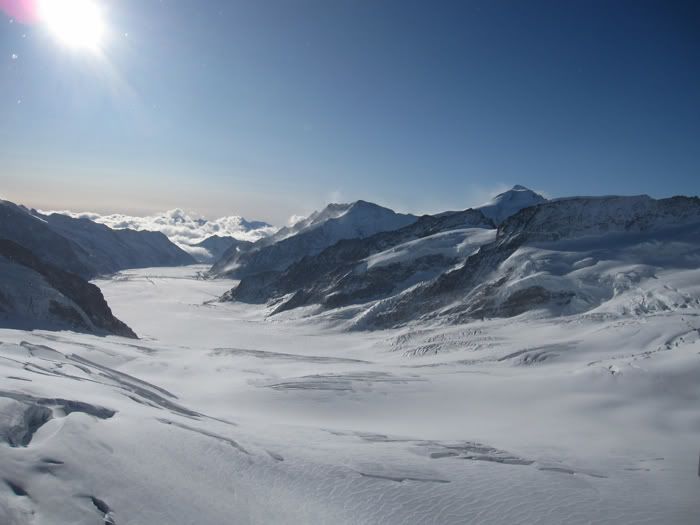

This is a lovely view to the south, showing a glacier stretching in the direction of Italy.

It won't be Italy right away where the glacier disappears into the clouds, but over there, I do have to speak Italian. Over here at the Top of Europe, the language spoken is German, though I can easily get by in English and Asian languages due to the tourist traffic.
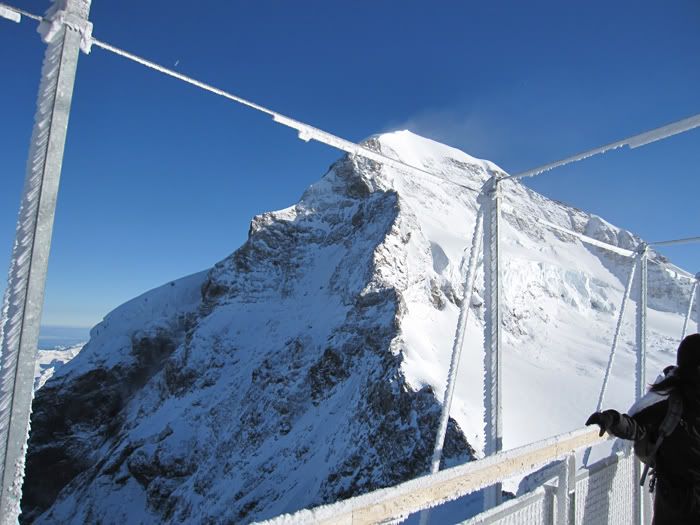


To the east lies Mönch. Nice view of snow blowing off the summit.

To my mountaineering friends and others, I jokingly refer to Mönch as "your stereotypical Catholic pedophile priest" - one who has gone commando under his robe, and whose pee-pee I had to endure watching as I had ridden up the tunnel. According to tradition, Mönch protects Jungfrau from Eiger behind him, but right now, it's me protecting Jungfrau from that pervert monk.

I took this particular photo outside the sheltered dome of the Sphinx. I found it impossible to stand outside for more than 30 seconds at a time.
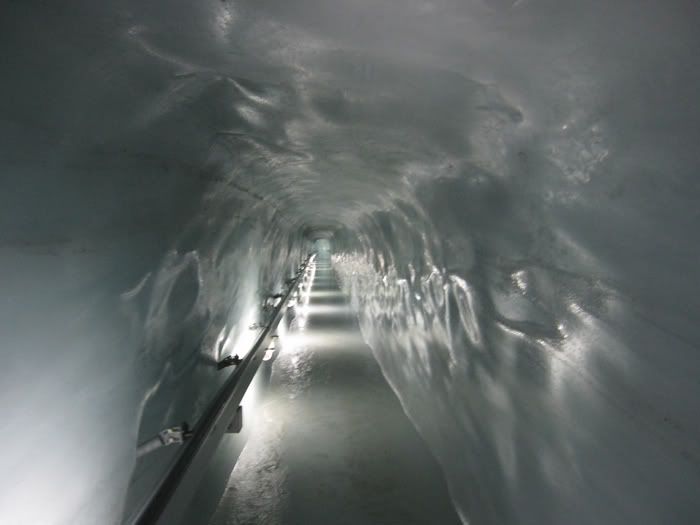

I am back into the visitor services area. One of its features is the Ice Palace, a tunnel dug into the glacier.

It is surely cold in here, and hypoxia is still trying to clobber me. But I am finding that moving around is the best defense against hypoxia.
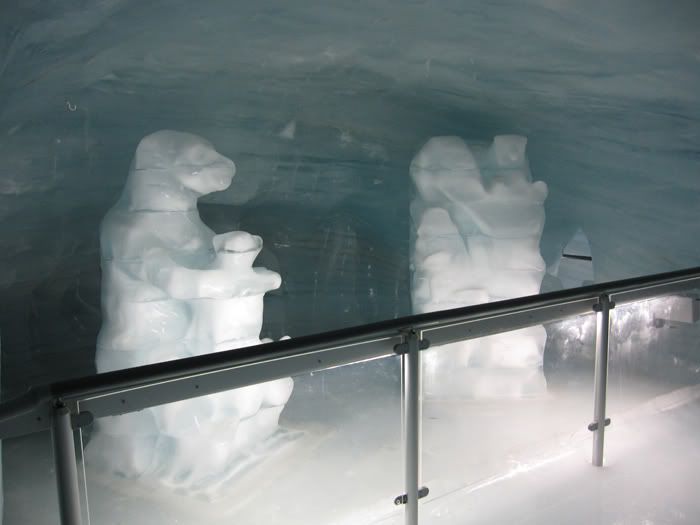

The Ice Palace is lined with many ice sculptures, like these polar bears.
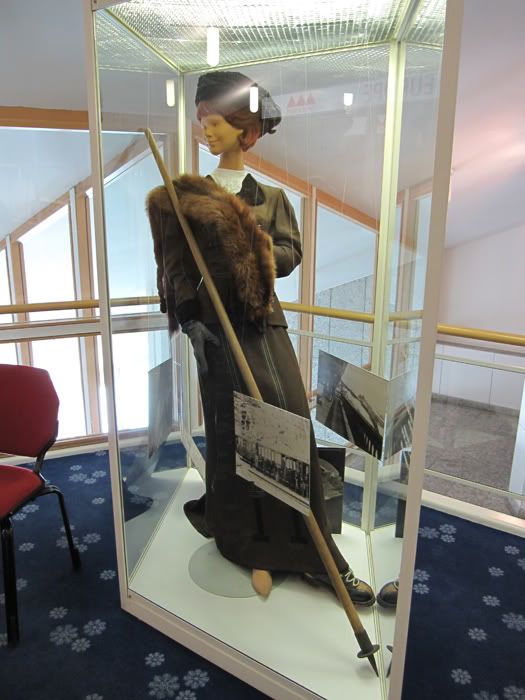

Early visitors to Jungfraujoch would have come dressed in outfits similar to this.

Practicality and warmth, while still showing off style and femininity, that's really my thing.
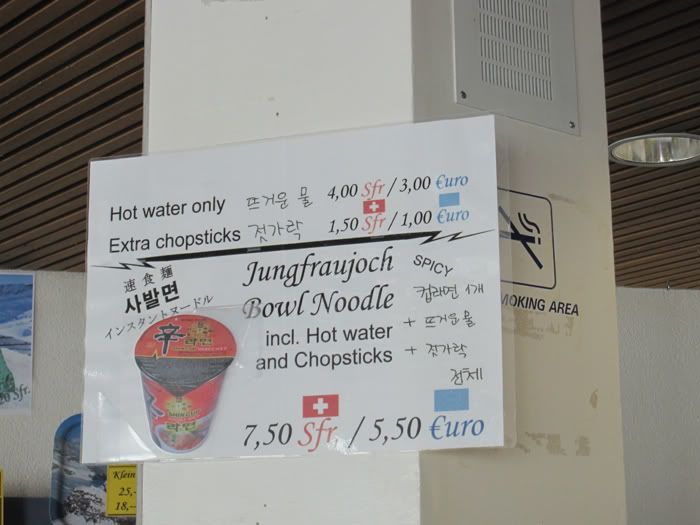

A number of snack items are available, but everything is grossly overpriced, because of the added complexity of hauling everything up from Interlaken.

Here is an interesting choice. I can buy a small cup of "Jungfraujoch Bowl Noodle" - which is just standard bowl of instant ramen from South Korea's Nongshim Foods. The price is an obscene 7.50 Swiss francs, and if I need extra hot water or chopsticks on top of what the attendant provides, that will cost me a small fortune as well. For comparison, buying the same bowl at a grocery store in Seoul or Los Angeles will cost under a franc - and not much more at one of the Asian grocery stores back in Interlaken.

Not exactly the most authentic way to go, but I took up on the offer, just for the experience. The chilly environs of Jungfraujoch make the hot noodles a good choice, as well as a memory to savor.

It is notable that the menu is done not in local languages, but in English and Korean, indicating that the noodles are targeted to Asian tour groups. And sure enough, every visitor today is either Japanese or Korean. My mother and I are chatting with the Korean visitors in Korean - though they have no idea (and no need to know) that we are really Americans independently traveling in a European Delivery Mercedes-Benz, rather than fellow group tourists from South Korea.
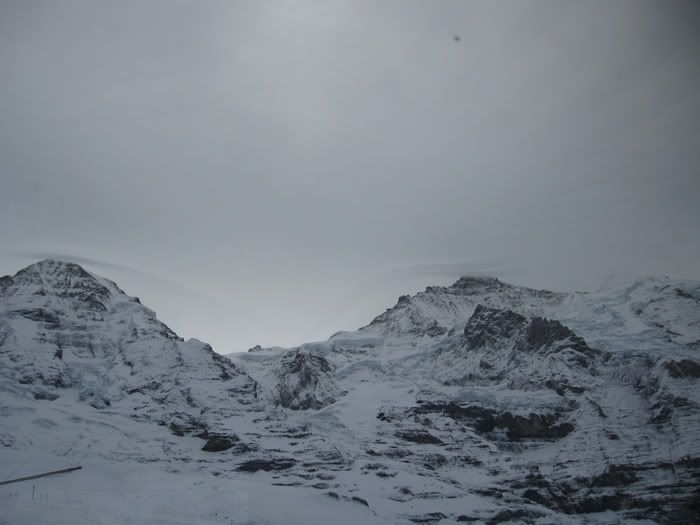

Now I am back to saner altitudes of Kleine Scheidegg, and my mother has finally come back to full vitality.

I have been previously advised that Jungfraujoch tends to be sunny in the early morning hours, before clouding up very fast for the rest of the day. And I am finding that to be indeed true. Good thing I took the early morning train. This photo shows Mönch on the left, Jungfrau on the right, and the Sphinx observatory in the middle.

Jungfrau would soon hide in the clouds and never show herself to my eyes again. She is indeed one very shy maiden. Glad to have come face to face with her.
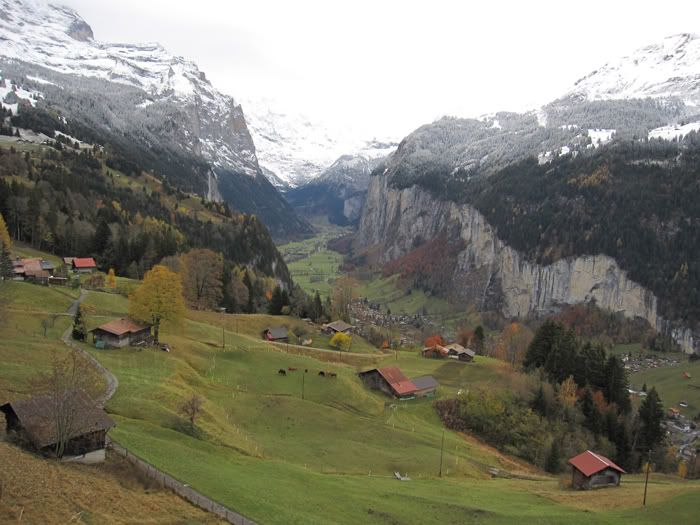

We proceeded downhill, to Wengen, just below the snowline. The initial plan was to take a cable car over to Grindelwald, and return to Interlaken there. But as it turns out, the cable cars are all shut down throughout the region; between the summer hiking season and the winter ski season, they were all shut down for routine maintenance, and indeed, that also explained why the Jungfrau Region was overrun primarily by Asian tour groups, rather than independent travelers and locals.

It would be another hour before another train would come to Wengen to allow me to continue downhill to Lauterbrunnen. Since the nearby hiking signs indicated that walking to Lauterbrunnen would take an hour anyway, I decided to walk down instead. This would also be an opportunity for my mother to enjoy the fresh Swiss Alpine air and fully recover from the hypoxia.

Downhill hiking is the best way to really take in the postcard Switzerland - the huts, the cows, the cowbell sounds, and the lush grass, as well as gorgeous views of the glacial valleys that look similar to Yosemite Valley (itself glacial). And excellent signage keep indicating which way to walk toward my destination, as well as estimated walking time.

The Lauterbrunnen walk time of one hour was said to have been timed by local senior citizen volunteers. Even at my more youthful walking pace, the one-hour estimate was right on the mark; these senior citizen volunteers are certainly master hikers.


As I walk further downhill, I can see a waterfall on the other side of the Lauterbrunnen Valley. I am again reminded of Yosemite Valley back in California.


And now I close in on Lauterbrunnen. In the lower left, I can see the cogwheel railroad.

As I walk down, I am sharing with my mother the basics of how the European economy works. I discussed the role of the European Union, even though I also stressed that neutral Switzerland is not an EU member, and also that the UK, despite being a member, tends to not march in lockstep with the Continent. I also discussed the European taxation policies with hefty income and sales taxes but smaller to no property taxes, as well as how the taxation pays for various government services, including universal healthcare and top-notch transportation network. I compared and contrasted the European Union's mechanisms with those of the US federal government, and wrapped up with an observation that while Americans may possess more materially (including the Mercedes-Benz we're driving around in, and sending to America the next day), Europeans have the basics (i.e. healthcare) better covered while consuming only a fraction of the resources.
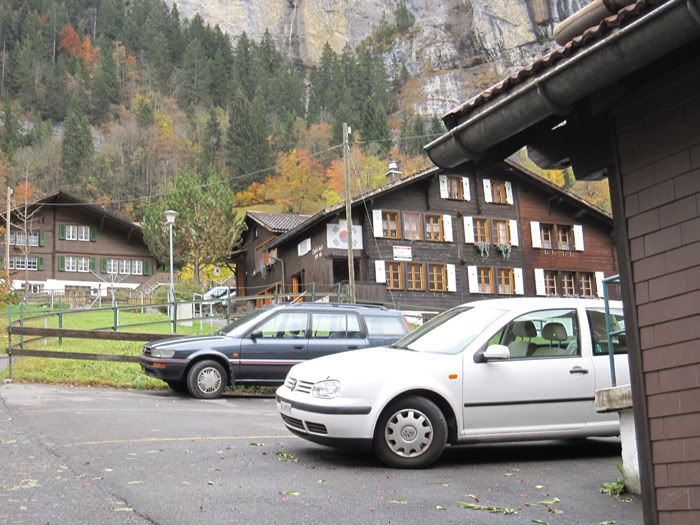

Now I am back in Lauterbrunnen, with only a few more minutes to go to the train station.

More evidence of heavy Asian tourist traffic. That hostel-style accommodation displays a South Korean flag, and has signs in Korean, though it turns out to actually have a Japanese owner.

For East Asian independent travelers to Europe, places like these can be a very good way to mingle with fellow travelers speaking the same language, eat the home cuisine, and gather travel information. This American with full English and limited French proficiency prefers to hang out with the locals and eat local food, but can certainly appreciate the value of this travel infrastructure for East Asians who want to go beyond the group tours but don't have the advantage of European language proficiency. It's thanks to places like this hostel that South Koreans have learned to travel through Europe on a budget - and also learned that the neoliberalism, Christian conservatism, and homophobia, taught to them by their former military dictatorship and its US Republican masters, are not the prevailing ways of the civilized world (and I am grateful, having seen the mentality improvements back in South Korea first-hand in 2008).

From Lauterbrunnen, twice-hourly commuter trains run back to Interlaken Ost. Now I am back in Interlaken but am not retiring to my hotel just yet.

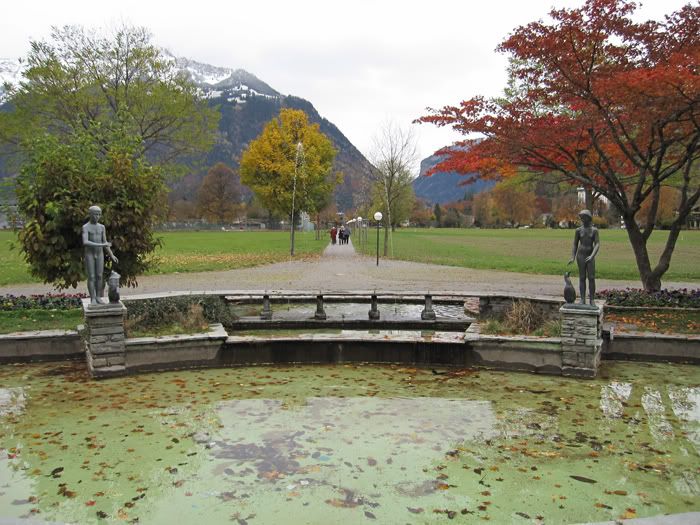
I am at the expanse of grass where I had seen grazing cows the previous day. Cows are still grazing, but this time I have the photo of these statues instead.

Again, thanks to the rise of the word "Tea Party" and "teabagging" to denote the anti-Obama neoliberal protests in the US, I am referring to all male nudes as "teabaggers," and chuckling at them. In this case, however, the male nude has a female companion, and I have chosen to call the female nudes "carpetmunchers" for a contrast. I was indeed wishing that a sane, progressive countermovement to the teabaggers would start in the US, and that it would indeed call itself the "carpetmunchers"; that would eventually happen in early 2010, though its name would be the Coffee Party USA instead.
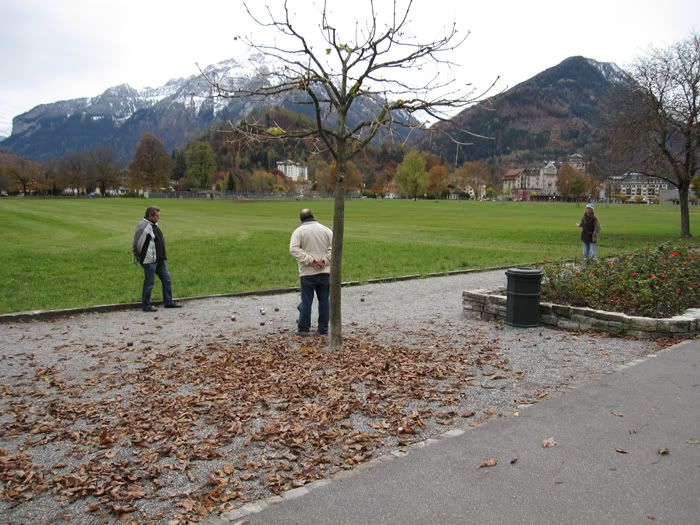

And nearby, these elderly men are playing a game of boules - a game where the objective is to roll a large metal ball as close to the smaller target ball as possible without hitting it.

I had seen the game in the Rick Steves videos, and am glad to see it in action.
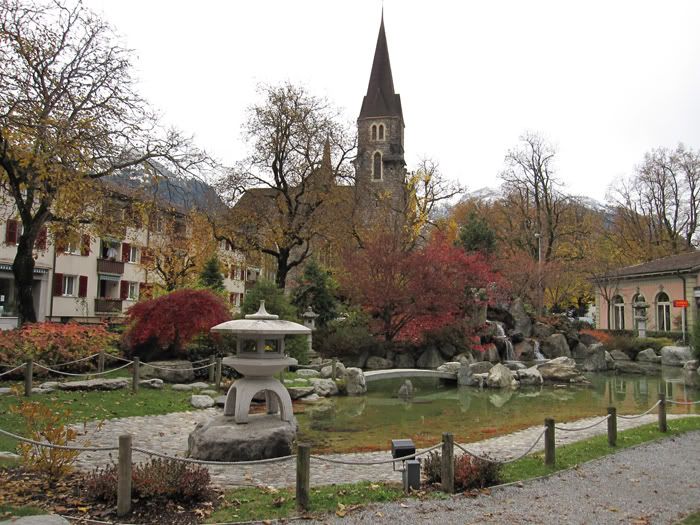

Now heading back to the train station, then on to the hotel in Goldswil. Here is a better look at the Japanese garden that I had seen the previous day.

As it turns out, this garden was a gift of the Japanese city of Otsu, which had been an Interlaken sister city since 1978, when Japanese tourists started arriving here in droves. The garden was built in 1995, with elements symbolizing the Berner Oberland mountains and lakes.

At this point, my mother and I did some souvenir shopping - though one particular souvenir shop, featuring some bells (not cowbells, but ceramic) that my mother wanted, was not open. In fact, it was the only shop with such bells, and it would not open for the duration of my Interlaken stay. Also, the cold air and hypoxia in the mountains had done their work on my mother, and she wanted to buy some cold medication; a pharmacie (as opposed to a smaller Apotheke which I normally see in German-speaking areas) next to Interlaken Ost helped us. While the English-speaking pharmacist did not recognize the American brand name Tylenol, she did choose a local-brand equivalent, and upon reading the packaging and the instruction sheet, I could indeed discern that it was a cold medicine, and could also figure out the proper doses. This being Switzerland, the instructions were trilingual - and again, when three languages are used, chances are good that I understand at least one (French in my case).

Upon retiring to the hotel, I took time to clean out and prepare the Mercedes-Benz for the shipping the next day, while my mother took it easy in the room. I also fired up my laptop and its Microsoft AutoRoute, so that my mother would finally have an idea of the route I had taken her through so far - as well as the route remaining (drive to Stuttgart, then TGV to Paris for a 3-night stay before flying home via Munich). Speaking of the car, its odometer reading was approaching 2,000 kilometers - and just over 1,200 miles when the units were switched to Imperial. I had driven a lot, and there was some more driving to do the next day.

The return to Stuttgart, the shipment of the vehicle, and the continuation to Paris will be the next post.

08 April 2010

Europe recap, Day 8: Venice

I am now proud to say that after having attracted the wrath of supporters of South Korea's far-right government as a result of my commentaries from Seoul in 2008, I am now attracting similar wrath from the People's Republic of China, where some bloggers are leaving me comments about how obscene the contents of this free-wheeling, Western liberalism-corrupted blog are. Of course, none of them will ever squeak past the moderation stage. It is notable that the Chinese are making their comments in Simplified Chinese, whereas the Koreans did in English, the language of the almighty superior masters of the US neocon movement; nevertheless, even between the far-right South Korean government and the nominally communist Chinese government, I see a common thread - that of Confucian authoritarianism.

In the meantime, I am glad to keep on traveling to places where Confucian authoritarianism is rightfully dismissed as backward barbarism. Like permissive Europe. And my recap continues - this covers November 1st, 2009, and my walks throughout the marvelous Italian water city of Venice.

As noted in my previous post, my Venice stay was cut from two planned nights to one, due to my mother's complaints. In the morning, I took the hotel's nice continental breakfast, then checked out, expressing my regrets to Signore Piero, the handsome son of Signore Roberto, the proprietor of the hotel who had checked me in. After paying for just one night, I did return to the hotel's guestbook, and did put in positive notes there - my mother's protests notwithstanding, I did like Pensione Guerrato, recommend it as heartily as Rick Steves does, and intend to return there on a future Venice visit.

I wasn't quite done with Venice, however; when I bought the water bus ticket, I made sure to choose the 12-hour pass at €16, since after getting to Tronchetto to load the car up, I wanted to come back into town to cram as much sightseeing as I could into the day. I was not going to leave this unique place without at least scratching the surface.


I am using the No. 2 water bus to get around. Starting at Rialto (or in some cases, St. Mark's), it travels up the Grand Canal toward the train station, Piazzale Roma, and Tronchetto, then continues on around the western periphery between Venice proper and an island to the west, before finishing at St. Mark's (and runs the other direction as well). For the Grand Canal portion only between St. Mark's and Piazzale Roma, the No. 2 runs as an express service, while the No. 1 makes all local stops.

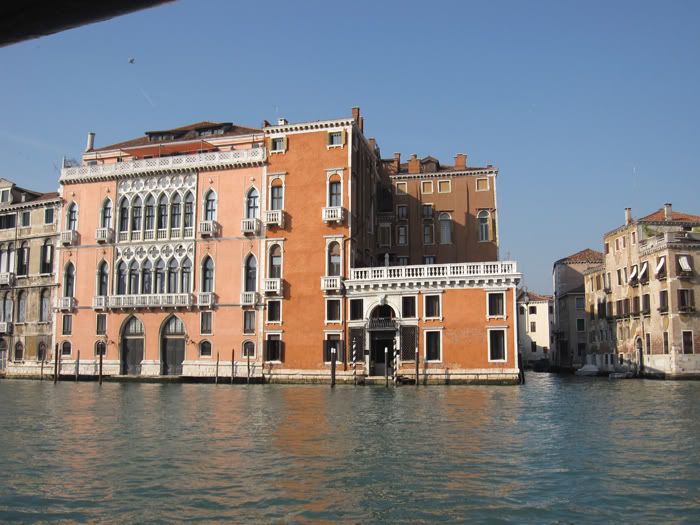
And riding around in a water bus can give me some really lovely views of some of the buildings along the way, like the above. Only in Venice.


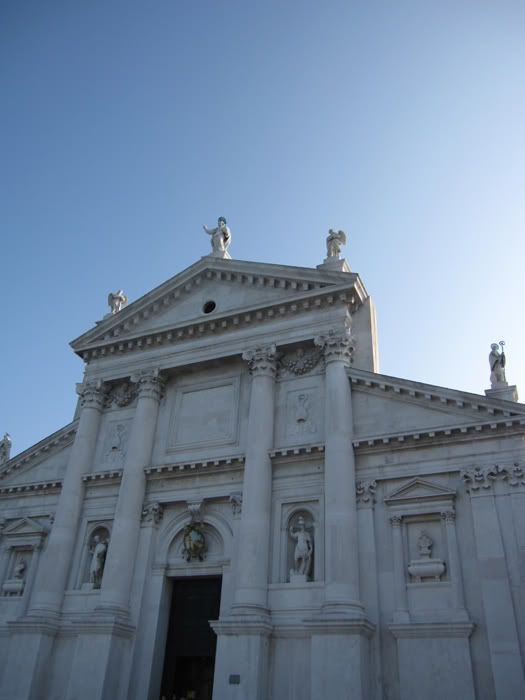
The last stop on No. 2 before it terminates at St. Mark's is San Giorgio Island, home to this lovely cathedral. I disembarked to check the place out.

Although the cathedral comes with its own Campanile-like tower that offers great views (the tower is very visible when looking from St. Mark's), I refused to pay the admission.


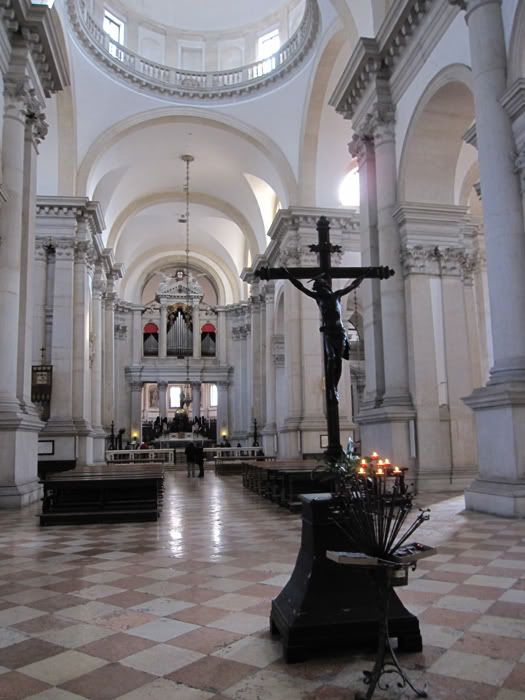
This is the interior of the cathedral. Small and cozy, a contrast from the grand cathedrals I tend to see elsewhere in Europe and North America.


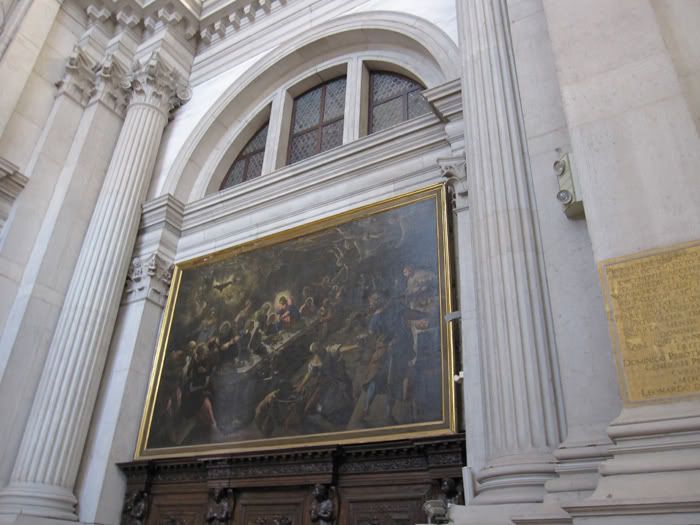
This cathedral's claim to fame is Tintoretto's rendition of the Last Supper. It was one of the paintings I had studied in my college art humanities class, as a contrast from the earlier Michelangelo version and its Renaissance geometric balance.


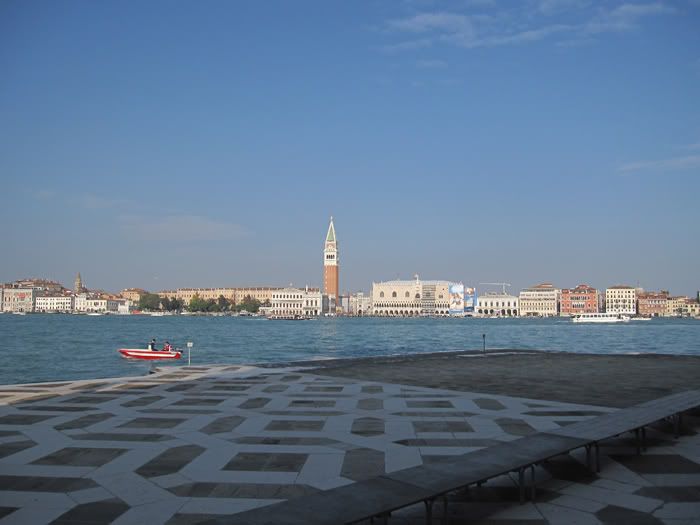
And now I'm looking back at St. Mark's Square.

In front, the water is almost up to the pavement level. It's high tide, and back at Rialto Bridge as I was leaving the hotel, I had noted that the water was starting to flood a sidewalk.

Venice had been built on a former sandy river delta (the river is today's Grand Canal), that had shrunk to an island 2.5 miles off the shore due to sinking. The sinking continues, and global warming and the resulting rise in sea levels don't help either. And sure enough, after I leave on this day, Venice would see an Acqua Alta - or High Water - that left St. Mark's Square under two feet of water on Christmas.


Now I am back at St. Mark's, and my next sight will be the Doge's Palace (Palazzo Ducalo), Venice's greatest sight. The Doge was an "elected" leader of Venice who nevertheless wielded dictatorial powers, and because of Venice's status as a maritime power and a trade powerhouse, the Doge was easily the most powerful man in Europe.

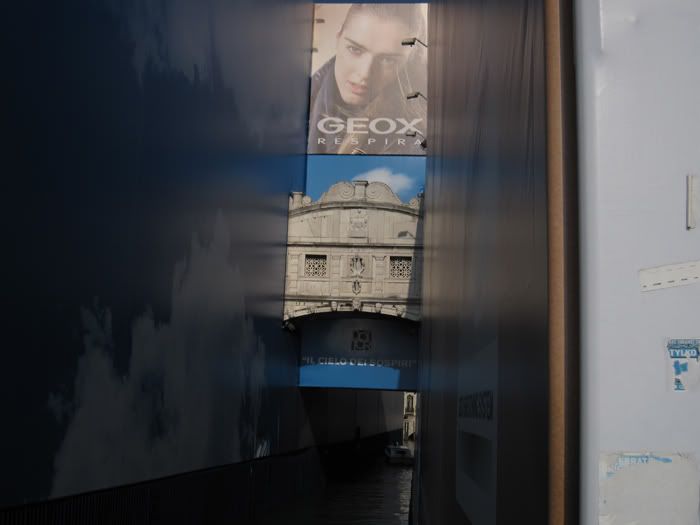
That is the Bridge of Sighs, which connects the palace to its prison annex. Condemned prisoners, as they are led away to their cell, would sigh here, looking out toward the beauty of Venice and knowing that it would be a long time before they would see it again. A psychological taunt, much like Alcatraz that's so near, yet so far, from San Francisco.

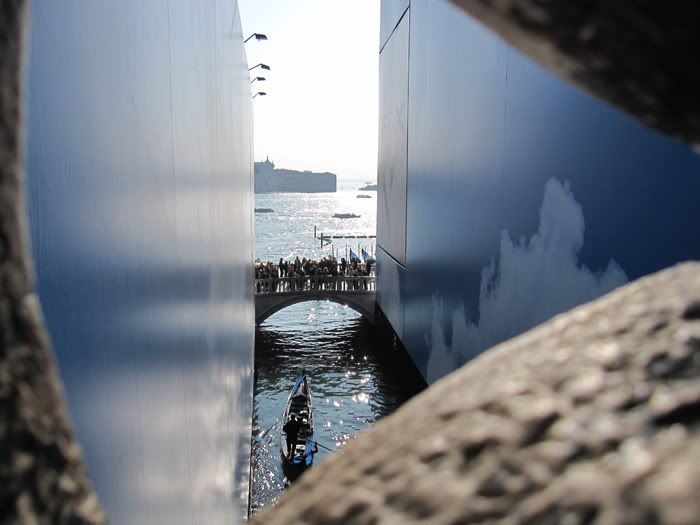
Both the palace and the prison annex are undergoing facade cleaning/restoration. The scaffolding is covered with advertisement, in order to generate income for the city government. This is controversial, of course.

Behind me along the waterfront, African immigrants are peddling fake purses and other fashion goods. While they are illegal - by buying from them, even I break the law and become subject to a €1,000 fine - they somehow find ways to keep themselves in business.


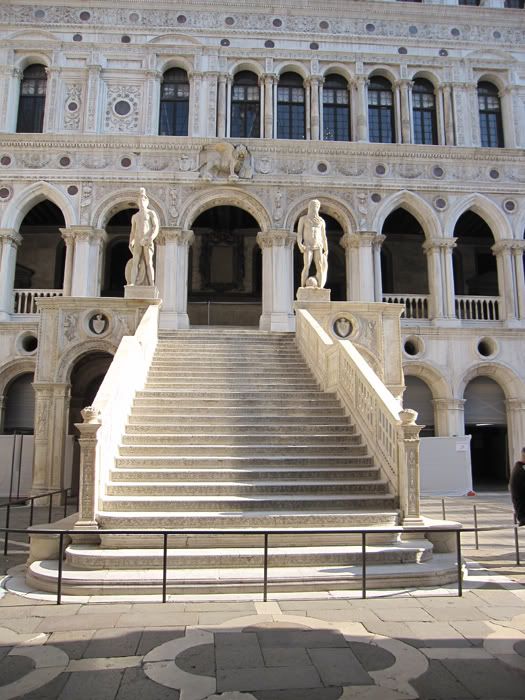
I have now paid admissions and entered the Doge's Palace. This staircase would've been where the visiting guests were welcomed into the palace.

The palace's elements are like other palaces' - including the Residenz back in Munich. In other words, propaganda elements to assert the power, legitimacy, and superiority of the inhabitant. Now that I am a week into this trip, I am starting to feel tired of the palaces. My mother's interest in home decorations leads her to palaces, while I would rather hit a museum for art history, which she can't stand.

The Doge's Palace does not offer a stand-alone admissions ticket. Starting this day, for the winter season it sells a ticket which also allows entrance to the Correr Museum next door, showcasing city treasures. For the summer season, the ticket costs a bit more, and I can choose from one of seven additional museums throughout Venice and nearby islands. Although I bought the winter combination ticket, I really didn't feel like going to Correr.


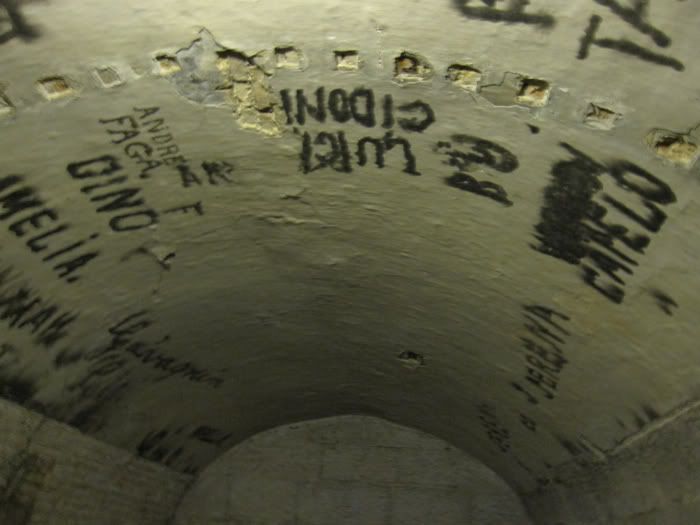
At least this is preferable to stuffy royal decorations. I am in the prison annex, and this is the ceiling of one of the cells, with prisoners' graffiti.

Casanova was known to have spent some time in this prison himself. His love prowess was such that according to Rick Steves' guidebook, when Venice's police was out in full force trying to apprehend Casanova, Casanova himself was enjoying some wild sex with the police chief's wife!


As I walk back to the palace to finish my tour, it's now my turn to peek out from the Bridge of Sighs, and sigh. Thanks to the scaffolding, the view out isn't as beautiful as I'd like.


I walked back in the direction or Rialto Bridge, and had a slice of pizza in the vicinity, thankfully in a pizzeria that was not too touristy.

Now, I am at a water bus stop for the No. 1, trying to get in the direction of Accademia, then walking from there back to St. Mark's Square, in time to enter St. Mark's Basilica, the other major Venice sight. The basilica, of course, had been closed in the morning due to the Sunday mass.

Loving this Grand Canal scene. The Grand Canal homes, back in their heyday, were the most opulent palaces/residences in the city. They still look grand.

I can also spot a water taxi. Here in Venice, every vehicle is water vehicle - even UPS delivery trucks have to be boats.


Now moving on toward Accademia. A look at more Grand Canal palaces, as well as a narrow side canal, one of many.

Historical preservation laws prevent major remodeling and demolition, and too often it's easier to let the buildings decay than to modernize them. Also, the rising water level also means for some of the buildings, the ground floor is no longer usable due to flooding.

This is clearly a city that is slowly dying, or at least becoming a tourist trap rather than a real city, as the residents flee. But because of the tourist traffic, efforts are being made to control water levels and ensure Venice's existence for many, many more years.

As mentioned in the last post, the Grand Canal can be crossed by only four bridges: two near the train station, one in the middle (Rialto), and one toward the south end (Accademia). To make crossings easier, traghetti (singular: traghetto) operate at seven points along the Grand Canal. The traghetti are retired gondola boats that are converted to shuttle duty, and cost 50 cents to ride; as they are privately operated independent of the mass transit, they don't accept transit passes.

Of course, the gondolas themselves are iconic of Venice as well, but prices are pretty high for a 50-minute ride. My mother didn't seem too interested, and I didn't feel like riding without her either, so I guess a Venice gondola ride will have to wait for a future visit.

I did get to St. Mark's Basilica, and waited a bit in line until its opening time. But its true gems are in a paid area, an upstairs museum that houses the original four horses from Constantinople (the current ones outside are modern replicas) and other relics; again, I refused to pay. The sanctuary was rather a dud.


At this point, I didn't see much point in extending my Venice experience. Walking through the crowds was not too fun, my mother was sick and tired of the place, and even for me, I wanted to be somewhere with more open space, and wanted to come back to Venice on a future visit to explore my favorite sights in-depth at a more leisurely pace. Besides, I wanted to get going toward my next destination, Switzerland, and try to get to a comfortable hotel on the way for the night.

Now I am back on the No. 2 water bus, returning from St. Mark's to Tronchetto via the periphery route. This is my farewell look at Venice. The crowds, the decay, and my mother's complaints really put a damper in my mood, but from this vantage point, it looks fabulous. And the fact that such a lovely city can rise out of the water, in itself, is simply incredible. Venice is one of those places that I didn't love too much while I was there, but lingers in my mind long after I left for good.

Back at Tronchetto, my parking came out to be €21, the 24-hour rate. I exited Venice the same way I came in - Liberty Causeway, drive through Mestre, and Autostrada 4. I decided to push west and just stop at some hotel when I got tired; I pushed past Verona, where I had come in via Autostrada 22, without stopping. I did stop at a nearby rest stop for a nap and a snack, during which I could hear German (!) national anthem in the concessions area (turns out, it was a telecast of a soccer game) and see some Italian men flock around the Mercedes-Benz (the E550 with a German export plate is certainly an unusual sight in Italy, and in any case, the E550 designation is for North America only, the European domestic models are designated as E500 even with 5.5L engine displacement).

Continuing to push west took me through some scenic areas, interspersed with sizable towns, though I continued to fight the Italian drivers and their reckless driving. It felt a lot like Los Angeles, though I must make it clear that unlike Los Angeles drivers, at least Italian drivers know how to drive, they simply show no respect to the law. Autostrada 4 continued to have three smooth lanes, increasing to four once I entered the Milan area. The tollway ended there, I paid another €18 or so in tolls, and I transferred to Autostrada 9, heading north through two turnpike-style toll booths to the Lake Como area and the Swiss border.

I exited at Como South exit, right after the last turnpike toll booth, when I spotted some "Drive Motel" signs guiding me off the autostrada. I had trouble finding Drive Motel, and after a while I switched my search over to a Hotel Ibis at €69. But I had even less luck finding Ibis, so I reverted my search to Drive Motel. Its signs appeared alongside signs for Hotel Cruise, which turned out to be its sister property. I eventually found the joint property, to find a nice surprise; in this case, the "motel" referred to a motor hotel, not a cheap hotel, and that meant that check-in and check-out were drive-through, and every room had its own garage. I went to the drive-through check-in, where a light-skinned, blue-eyed blonde greeted me (she certainly looked more Northern European than typical Italian), and advised me that while a night at the Drive Motel would cost me €95 with no breakfast, checking in on the Hotel Cruise side would be €90 with breakfast. I heeded her advice, went around to the Hotel Cruise side, and checked in for one night. This was a very modern, nice property, and I was glad to stay there - and so was my mother, thanks to television service.

The next morning would have me continue my journey. Como is on the Swiss border, so most of my driving would be in Switzerland, and I would find myself in Interlaken, my destination, by early afternoon.

09 February 2010

Europe recap: Day 1, Munich, Part 2

The rest of my Munich experience on 25 October 2009, after wrapping up the Residenz tour... The Residenz was much bigger than I had expected, and due to the Quiet Day Sunday rendering even convenience stores closed, I was growing hungry.

My first goal after the Residenz was to walk over to the three Pinakotheks ("picture galleries") - Alte Pinakothek (pre-1800), Neue Pinakothek (19th Century), and Pinakothek der Moderne (20th Century) - for some art. Sunday admissions was supposed to be only a single Euro anyway, so time to take in some art.


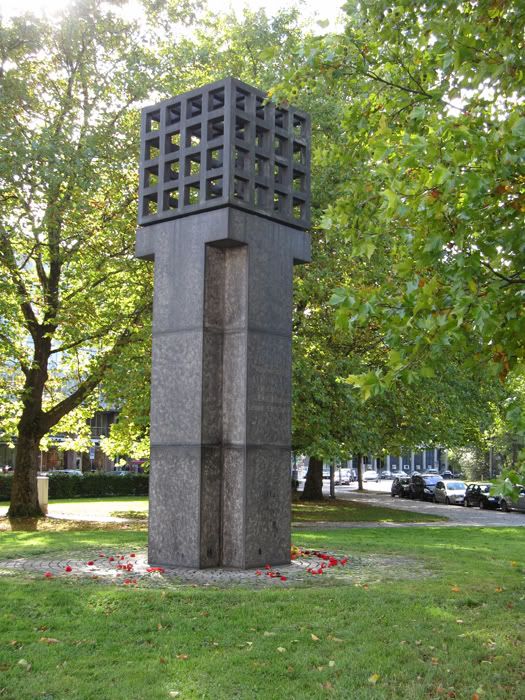
On my way, I came across this plaza with this eternal flame. A nearby sign read Platz der Opfer des Nationalsozialismus, or Place for the Victims of National Socialism. It bore remembering that Bavaria's conservatism played a key part in the formation of the Nazi ideology. Adolf Hitler, though Austrian by birth, started his movement right here in Bavaria, and while the Nazis were fringe extremists at first, Hitler's masterful manipulation of public opinion won him ever more support, until he was the Führer once and for all, and destroyed millions and millions of lives.

While Bavaria remains very conservative, Munich is the liberal hotspot of the region, and I am treasuring its vibrancy. If Bavaria is indeed Texas, then Munich is its Austin. And for that matter, if Bavaria is California (since California is very conservative as well), then Munich is its San Francisco.


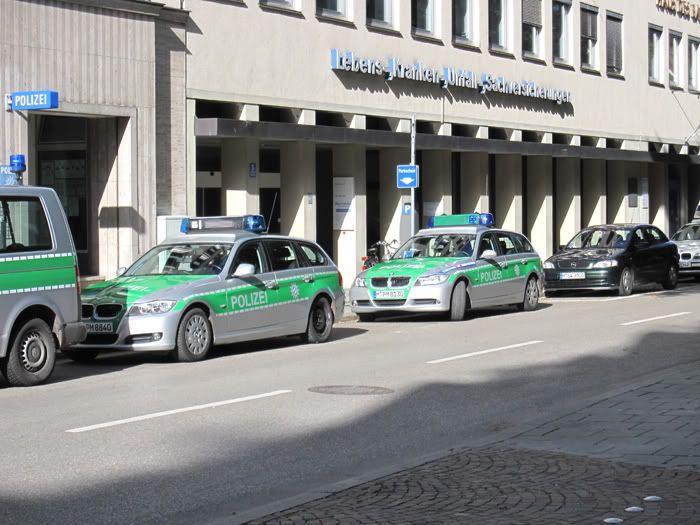
More reminder that I am in Bavaria. Even the police cruisers are made by Bayerische Motorenwerke, better known by its English name Bavarian Motor Works, and shortened to BMW. And sure enough, Munich is BMW's home city.

The BMW emblem, called the Roundel, depicts a spinning aircraft propeller, since BMW's first product line was aircraft engines. And its colors are blue and white - the colors of Bavaria. In fact, the letters BMW officially also stand for Blau mit Weiß, or Blue and White. Driving a BMW is, when it comes down to it, all about the Bavarian pride.

I am once again reminded that for several years, I had dreamed of coming to Munich, to take delivery of a BMW of my own. My original goal, in fact, was to simply terminate the lease on my 2004 325i (fourth generation, codename E46) in early 2007, order a fifth-generation 3-series (E90/91, like the ones above) as a replacement, and come to Munich for the pickup. But eventually, I ended up purchasing the 2004 outright - and selling it in anger over BMW's continued support of far-right causes, including the Pope and Fox News Channel.

And yes, Pope Benedict XVI, a noted homophobic a-hole, is Bavarian, and thanks to BMW's generous corporate sponsorship, hasn't bought a car in decades.

I am glad to finally be in Munich, as a stopover on my way to Stuttgart to pick up a Mercedes-Benz instead. And to keep the Mercedes-Benz theme, I am skipping the BMW Welt next to Olympic Park in the northern reaches of the city. BMW Welt has a museum consisting of vintage BMWs, but very few vintage BMWs are of any interest to me anyway.

Shortly thereafter, I arrived at the Pinakotheks. My intention was to only see the Alte Pinakothek, since it was mid-afternoon already and I wanted to save the greatest artwork for Paris and its Louvre. But with the admission jacked up to €7 for a temporary exhibition I couldn't opt out of, I decided to skip all Pinakotheks. Instead, I decided to hop on the U-Bahn for a quick hop over to Deutsches Museum, Germany's answer to the Smithsonian science museums in Washington, DC and one of the finest science museums in the world.


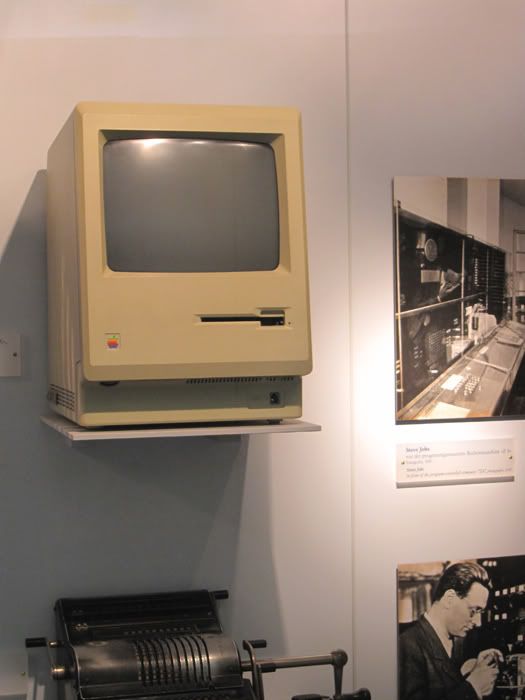
Here is a display I liked - the original Apple Macintosh.


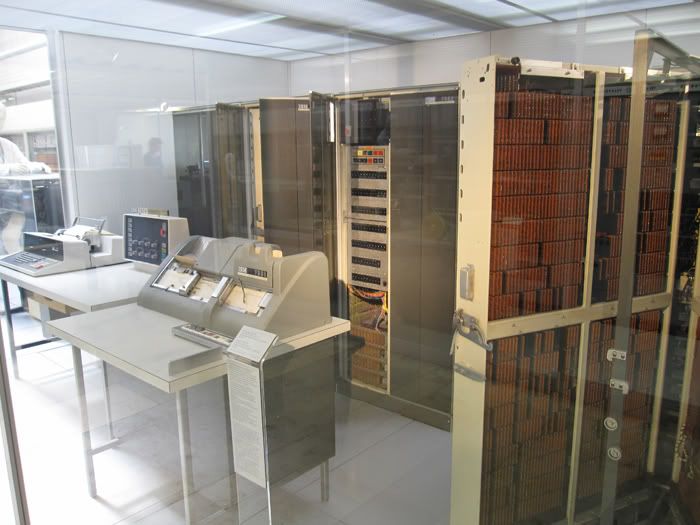
The Deutsches Museum is extremely hardcore. When it comes to computers, I don't just see a Mac - I see a zillion other computers throughout history, all the way back to rudimentary adding machines of the 19th Century. This particular example is an IBM 7074, built in 1962, and used by Allianz. It was state-of-the-art for its day, using punchcards for data input and using something more reliable than vacuum tubes for memory. Even then, its storage capacity was well under a megabyte.

The museum is so hardcore, and covers so many subjects, that trying to cram it into an afternoon, as I tried, is utterly hopeless. I can go from the watermills that powered the Industrial Revolution to a whole catalog of Pratt & Whitney jet engines, and a lot more, even including agricultural technologies. For an engineering enthusiast, this place is pure fantasy.

The museum also runs separate facilities elsewhere in the Munich area to house its land vehicles and aircraft. They will have to wait for a future visit.


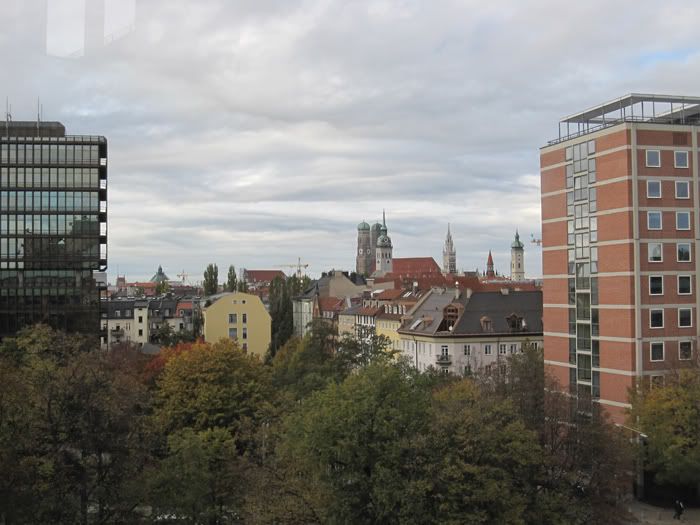
But when it comes down to it, Munich's Old World charms are far important than all the technology and the sights. And I am getting yet another glimpse of the city skyline from one of the Deutsches Museum staircases. I can see the spires of the Frauenkirche and the Neue Rathaus, among other buildings. This is a skyline that I don't get tired of easily.

I had to wind the day down at this point, given the realities of Quiet Day Sunday and also my mother's foot pains. The jet lag was also bugging me, and a bottle of water that I had bought in the U-Bahn turned out to be carbonated water, and not so great tasting. I had to retire, collapse on my hotel bed, and try to figure out a way to overcome the jet lag.

Next up: Monday, October 26th, involving some final moments in Munich before the train run to Stuttgart.

17 January 2010

Europe recap: Day 1, Munich, Part 1

At last I am starting to write my European travelogue, almost 3 months after the fact.

I loved this trip - it finally allowed me to become intimate with Europe, something that had never happened since the disaster that was my 1999 Amsterdam trip. The first day was spent trying to adjust to the time difference, as I toured Munich, the crown jewel of Bavaria, and a place I had wanted to visit for years.


It's the evening of Friday, October 23rd.

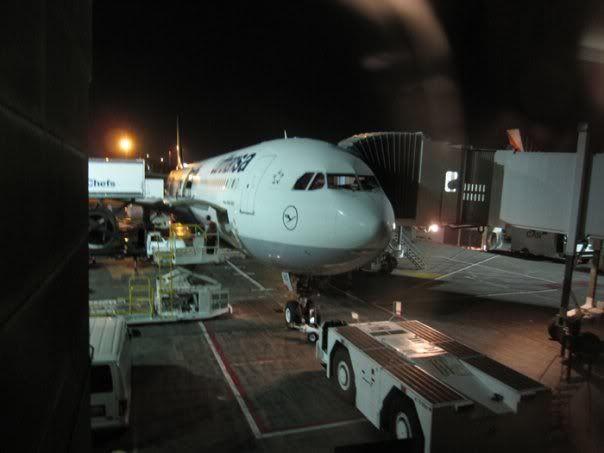
This is my ride to Europe - an Airbus A340-600 flying for Lufthansa. Flight 453 will take me straight into Munich using a great circle route, once it climbs over the Disneyland fireworks and the lights of Las Vegas. This was my first-ever flight on Lufthansa, and I was very pleased with the professionalism. Lufthansa's corporate slogan is "There is no better way to fly" - and I can attest to its veracity. And with all the frequent flier miles racked up, I qualify as a United elite customer again into 2010 - and my 2009 elite status also allowed me to get a 25% mileage bonus on this flight too.


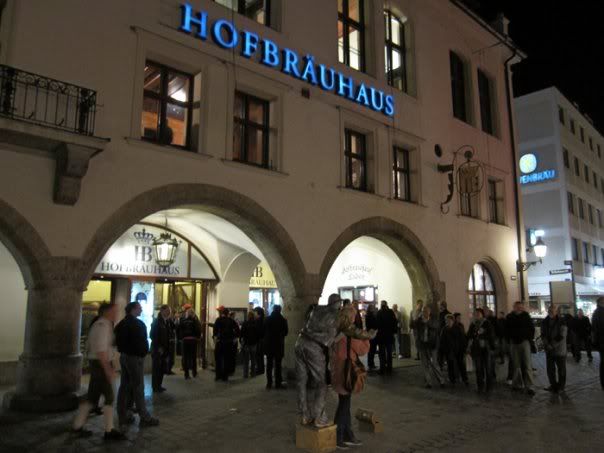
By the time I landed in Munich and got into town, it was early evening of Saturday the 24th. I was jetlagged but didn't want to hit the sack right away - so I had to do some night sightseeing. And what better place to do it than the Hofbräuhaus, Munich's famous brewery and greatest tourist trap?

This place was packed with foreign tourists - so much so that I didn't bother buying any beer or sausage. But it was great to see lederhosen-clad men walking around, and get my first taste of the blue-and-white Bavarian color scheme that would become so familiar over the next several days. As for the Bavarian beer (brewed under the German Purity Law), I would have to wait until hitting the US branch of Hofbräuhaus in Las Vegas two months later.


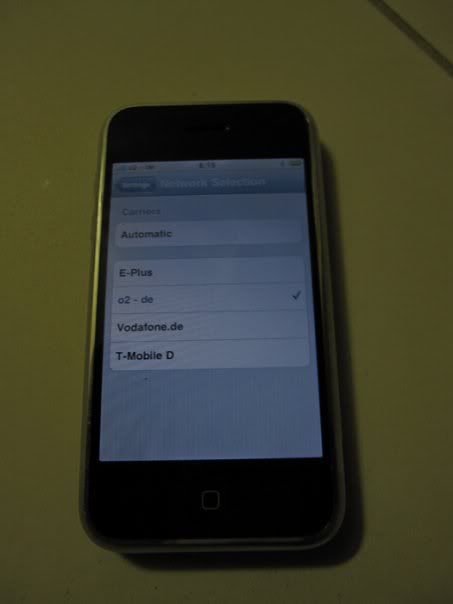
No luck adjusting to the new time zone, especially since Daylight Saving Time ended overnight. On a sleepless morning I checked my iPhone to see if it would work - and sure enough, it does. I had had no luck getting my original tri-band iPhone to work in Asia, as both South Korea and Hong Kong turned out to be quad-band, but tri-band is adequate in Europe, so I'm roaming with ease.

An iPhone in its home country is locked to a single carrier - that means AT&T for this phone. But since I am overseas, the iPhone becomes unlocked, and can choose a carrier automatically, or I can manually choose a carrier from whatever's available. In Munich, I am picking up signals from four providers: E-Plus, O2 Germany, Vodafone Germany, and T-Mobile. As it would turn out, some carriers had better coverage than others - a few days later, I found myself under Mad King Ludwig's fantasy castles, and O2 was the only carrier with any signal there.

Whenever I entered a new country, or changed providers, I got a free text message from AT&T alerting me to roaming rates applicable to my account and location. Since I didn't purchase any roaming plans, my rate was the default one at $1.29/minute for voice, and $19.97/megabyte for data (ouch!). I ended up using only five minutes of voice airtime in Europe. And rental phones would not have saved me much either, since their best rates are usually only in one country (usually the UK) and the rental itself costs money.


Now I am sightseeing. It's Sunday the 25th - and since Sundays are Quiet Days in Germany, I can forget about shopping. Even if it means shopping for a bottle of water - UGH! (Yes, even convenience stores must close on Sundays, unless they're near enough the main train station to "cater to travelers" rather than locals.)

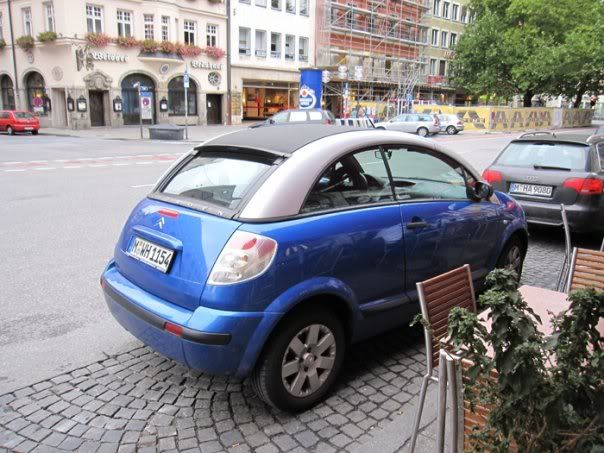
Since this trip is about picking up a Mercedes-Benz, I'm making many automotive observations. Here is the first of many - a Citroën whose model series I cannot readily identify. The canvas sunroof definitely heralds back to the venerable 2CV, however. I love French cars' sleek designs - and especially when it comes to Citroën, I have a weak heart, given that a Citroën (though it was a Xantia designed in Italy) was the first car I ever drove outside North America. I'm not too keen on the 2CV or this modern reincarnation, but would love to have a DS if I can ever start my own antique car collection.


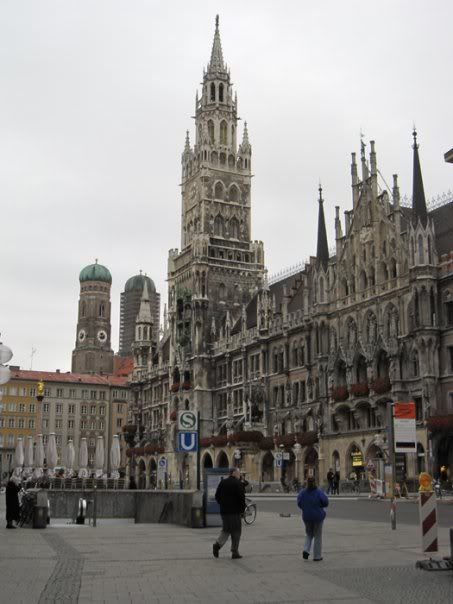
I am back at Marienplatz, looking at some Munich landmarks. I had been planning a Munich trip for years (the original intention was to pick up a BMW via European Delivery, it's ironic that I am finding myself in Munich now as an intermediate stop on my way to Stuttgart for a Mercedes-Benz), so I'm finally glad to see those landmarks.

The front is Neue Rathaus (New Town Hall) - built by Mad King Ludwig in the 19th Century in Dutch architecture, clashing with the more Bavarian architecture of the surrounding buildings. Though despite all the traditional architecture of the buildings, they were most likely rebuilt after World War II, since the Allies had heavily bombed this Nazi stronghold. The Neue Rathaus is home to the Glockenspiel, the famous mechanical clock/figurines set that comes into action a few times a day.

The onion twin domes to the rear belong to Frauenkirche (Church of Our Lady), the seat of the strong Catholic power in Bavaria. No buildings in Munich may be taller than the twin domes.

The foreground has newer additions - subway entrances built for the 1972 Summer Olympics. The green S refers to the S-Bahn, a suburban commuter rail system run by Deutsche Bahn (national rail) using conventional rail tracks. The blue U refers to the U-Bahn, the city-run subway system that uses dedicated tracks. Major German cities use a mix of S-Bahn and U-Bahn to get their commuters around. The two systems have integrated zone-based ticketing, and works on the honor system with no turnstiles and only occasional ticket checks by the transit police. A foreigner using a rail pass that covers Germany can ride the S-Bahn for free, since it is part of the national rail, but must still pay for the U-Bahn.


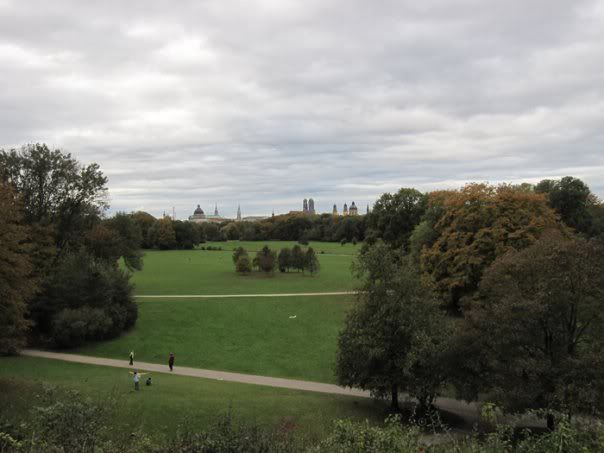
The Englischer Garten (English Garden) stretches from the old city core almost all the way out to the airport, along the Isar River. It was the creation of an American gardener, who had been loyal to the British cause during the Revolutionary War. Upon the American independence, he fled to Britain, before coming to Germany to work on this urban park in English style.

From this vantage point (atop a mound at a mausoleum) I can make out the old city core's spires quite well. Below the mound, a father and his son fly a remote-controlled airplane. There also are joggers and walkers out and about. Munich is considered the most livable city in Germany, and I think the English Garden plays a large part in that reputation.

But as this is a cool autumn day, rather than a hot summer one, I am spared from the sight of nude sunbathers that also make the English Garden famous.


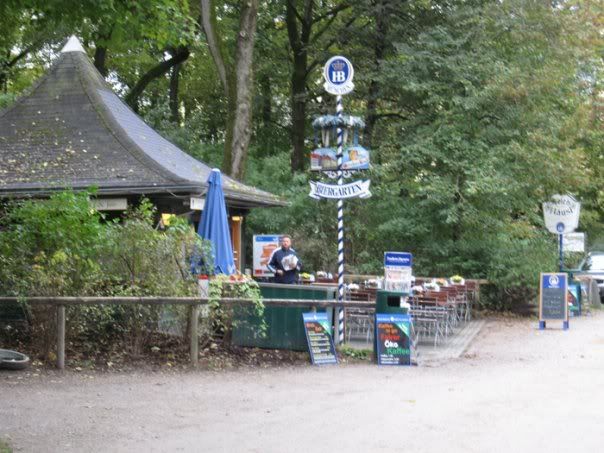
Here is a Biergarten (beer garden), one of many that dot English Garden. In Bavaria, on a warm sunny day, a standard routine is to buy some food (pretzels or sausage) at a traditional market before coming here, add beer here, and picnic. The HB logo indicates that this beer garden is run by the very brewery that runs Hofbräuhaus.

Here is a look at that blue-white Bavarian color scheme, of course.

I am already noting that the Free State of Bavaria really takes its identity seriously. There are sixteen states in Germany, and in addition to Bavaria, two other states are Free States. However, normally, a Free State is little more than a nomenclature quirk, just like the Commonwealths of Massachusetts and Virginia or the California Republic in the US. But when it comes to Bavaria, the Free State identity is taken seriously. Bavaria was one of the last regions to join Germany, and many Bavarians still speak of their state as if it were a sovereign country. Bavarians are Bavarian first, and German only as an afterthought.

Some people refer to Bavaria as the "Texas of Germany" - and that's an apt comparison, since Texas is also a whole other country. The religious conservatism is another parallel between Bavaria and Texas; Bavaria is the Catholic outpost of northern Europe, so much so that Pope Benedict XVI hails from Bavaria. The religious influence is so strong that Bavarians often use the greeting "Grüß Gott" (God's Greetings) rather than "Guten Tag" standard elsewhere in Germany. I stuck to the informal "Hallo" instead.


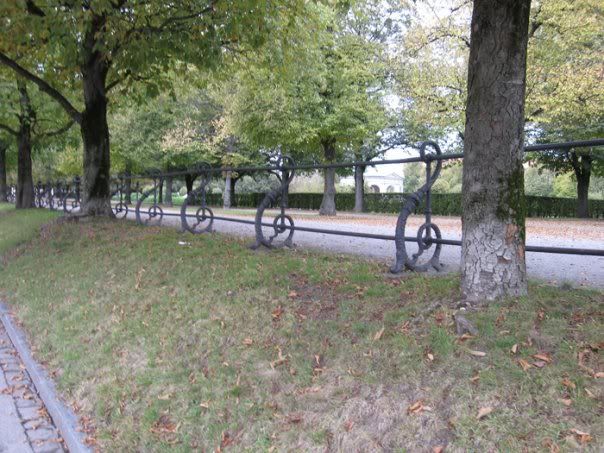
I am going through Hofgarten, the royal garden that borders English Garden and the Residenz. I had to take this photo for the unusual fence post design - resembling the treble clef on music notation.


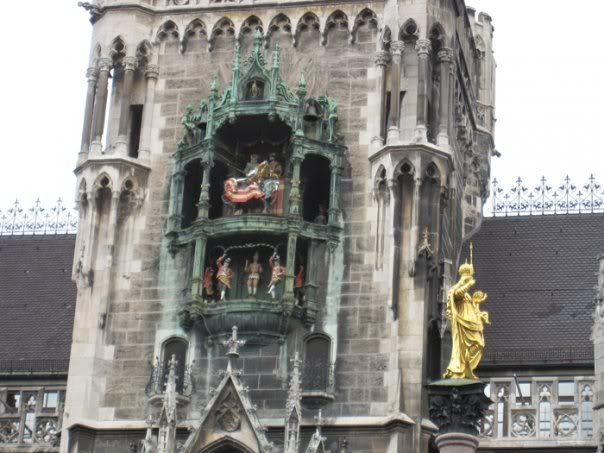
It's 11 in the morning. I have returned to Marienplatz to take a look at the Glockenspiel in action. The Glockenspiel has two levels of mechanical movements - a joust match on top, a celebratory dance on bottom. The blue Bavarian knight has just knocked over the red opponent on top. A giant music box plays a melody as the movement continues its routine.

Compared to modern-day electronic displays, this is primitive. But given that this is all old-fashioned mechanical clock movement, it's amazing.


Now it's time to move on. I am now visiting the Residenz, the palace of the Wittelsbach family, the last rulers of independent Bavaria. The Wittelsbachs included King Ludwig II, better known as Mad King Ludwig, whose world-famous fantasy castles I am seeing later in the trip.

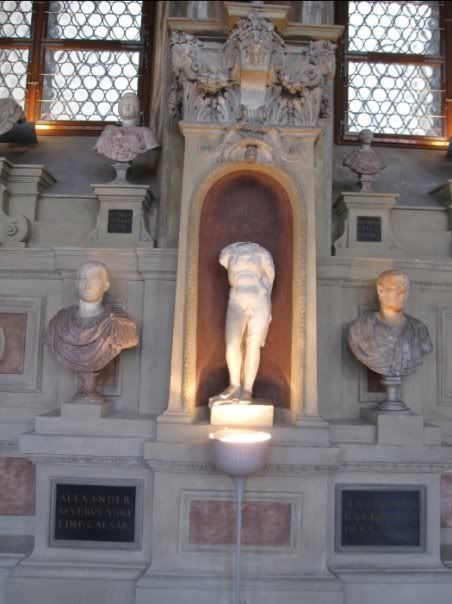
The Wittelsbachs, like other European royals, tried to legitimize themselves by claiming to be descendants of the Roman caesars and other great rulers of the past. This nude Roman emperor statue is here for that purpose.

2009 in the US was marked by the word "teabagging," which referred to the far-right protests against Obama's supposed increased taxation. The word came from the protesters claiming inspiration from the Boston Tea Party of 1775 that led to the American Revolution. But teabagging, originally, refers to certain activities done using a man's scrotum (could be sexual, could be hazing). Given that, I referred to every male nude I came across in Europe as a "teabagger," and chuckled.

This hardcore lesbian never had so much fun looking at male genitals. And Europe is so full of exposed male genitals. I would rather be carpet munching any day, however. Teabagging is evil.


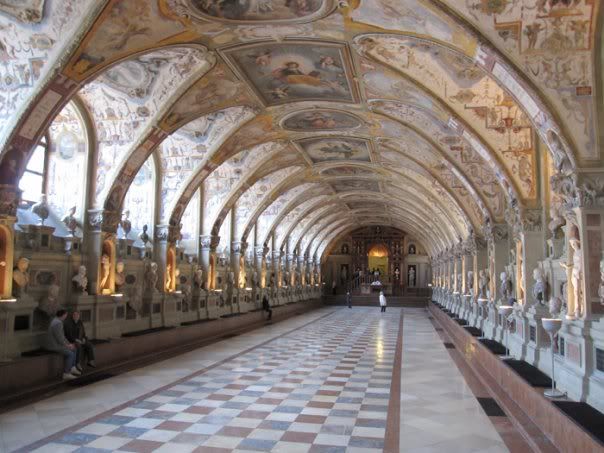
And this is the Antiquarium, the room full of the Roman teabaggers. With an imposing room like this, the Wittelsbach family could inspire awe from visitors, and draw at least grudging respect.

There are other propaganda rooms throughout the Residenz, including one that has all the Catholic relics, and one full of portraits (including that of Charlemagne, another supposed ancestor of the Wittelsbachs). But honestly I didn't like the Residenz - it did not have that "aged, authentic" flair, since most of it had been destroyed by Allied bombings, and rebuilt after the war using Nazi archive photographs.


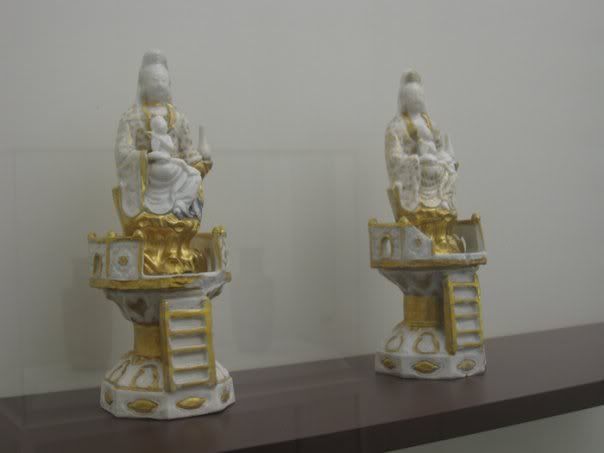
This sight is far more comforting than those teabaggers, for sure. Here are two examples of Kwan Yin, my transgender matron saint.

European aristocracy and royals had a penchant for Asian ceramic luxury goods, and the Dutch traders were very eager to cater to their needs. These Kwan Yins came from China by way of those Dutch traders.

Both Kwan Yin statues are seen holding a baby; Kwan Yin is a fertility symbol in China (too bad she never gives birth herself, as she is transgender). However, it is easy to note the strong parallels to a more familiar imagery here in Europe: Virgin Mary with Child. Given Bavaria's strong Catholic traditions, I am noting that even more.

Part 2 will be uploaded in a few days (I hope), with stuff from the rest of my Munich day, including the Deutsche Museum.